

The Building is an educational facility for students at ESALA (Edinburgh School of Architecture and Landscape Architecture). Currently considered the heart of the school, Minto House is redeveloped in this project to propose spaces that invite users to break away from the studio and explore new approaches to design thinking. A more inclusive and community focused learning environment that aims to meet the expectations of the 21st century architecture and design student.


Claudia Maude
The Building
Follow:

South East Front Elevation of Minto House in Chambers Street

Project description
Site Context
Address: Minto House, 20-22 Chambers St, EH1 1JZ, Edinburgh
Site Size: 5633 sqm
Number of Floors: 5, excluding the Lower Basement
Date of Construction: Minto House and the Free Church in 1878, the Maltings building in 1849 and the link in 1972.
Architect: The original Minto House was designed by Peter Henderson; the former Free Church by Robert Thornton Sheills. The link was completed by Ian G Lindsay & Partners.
Original Use: Minto House was originally built for extramural medical classes; then it was internally linked with the building on the east side, a Free Church, sometime between 1900 and 1910 according to historical maps. In 1972, a new link was built to merge the two with the building on the west, an old brewery site.
Current Use: a teaching and learning facility for the University of Edinburgh’s School of Architecture and Landscape Architecture (ESALA).
Listed Building Category: B
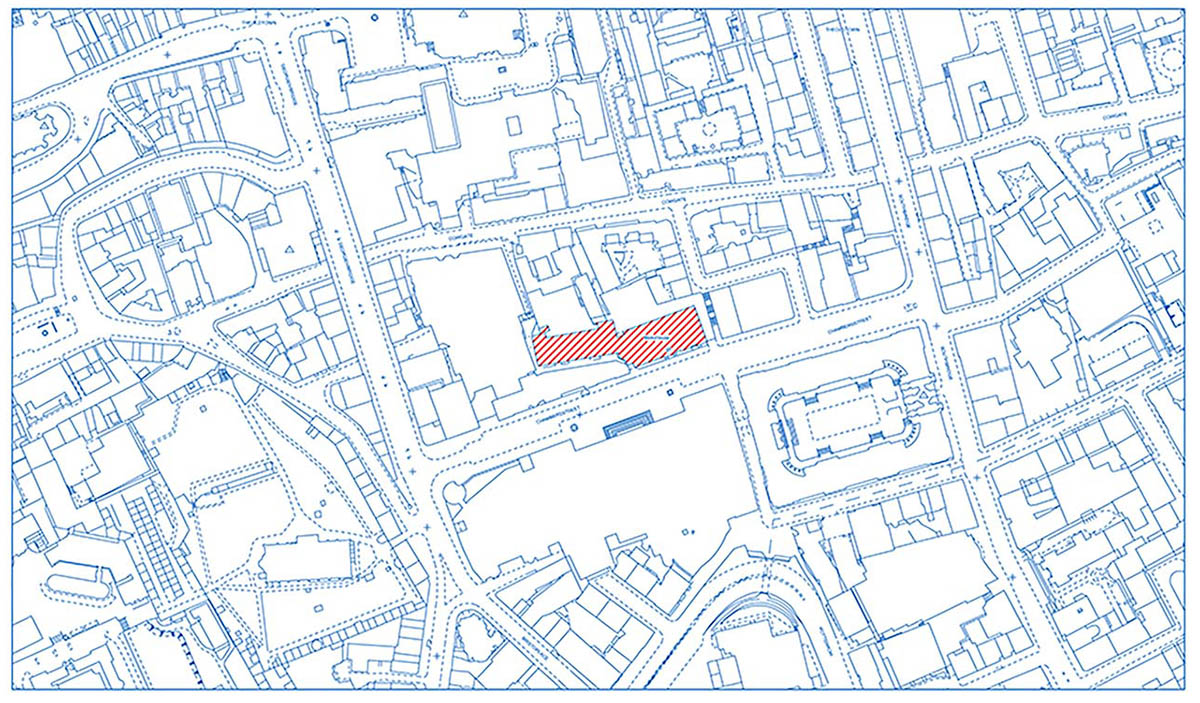
Location Plan
Design Strategies
Influenced by the heritage of the site and the school’s long history, the facilities provided aim to encourage collaboration and innovation, remaining flexible and adaptable where possible. The spaces are organised according to the different users, regulating access into certain work areas and providing clear circulation throughout the building.
The suggested design aims to organise activities into three areas: Practice, Theory and Connection. Whilst the first combines traditional methods with the latest technologies to delve into each stage of the design process; the two latter zones offer resources to understand, question and share the work created. In this way, a more inclusive and engaging environment can be promoted; one that brings together members of the university with industry professionals and the general public, creating a strong sense of community that can spread across the school, the city and into local practices.
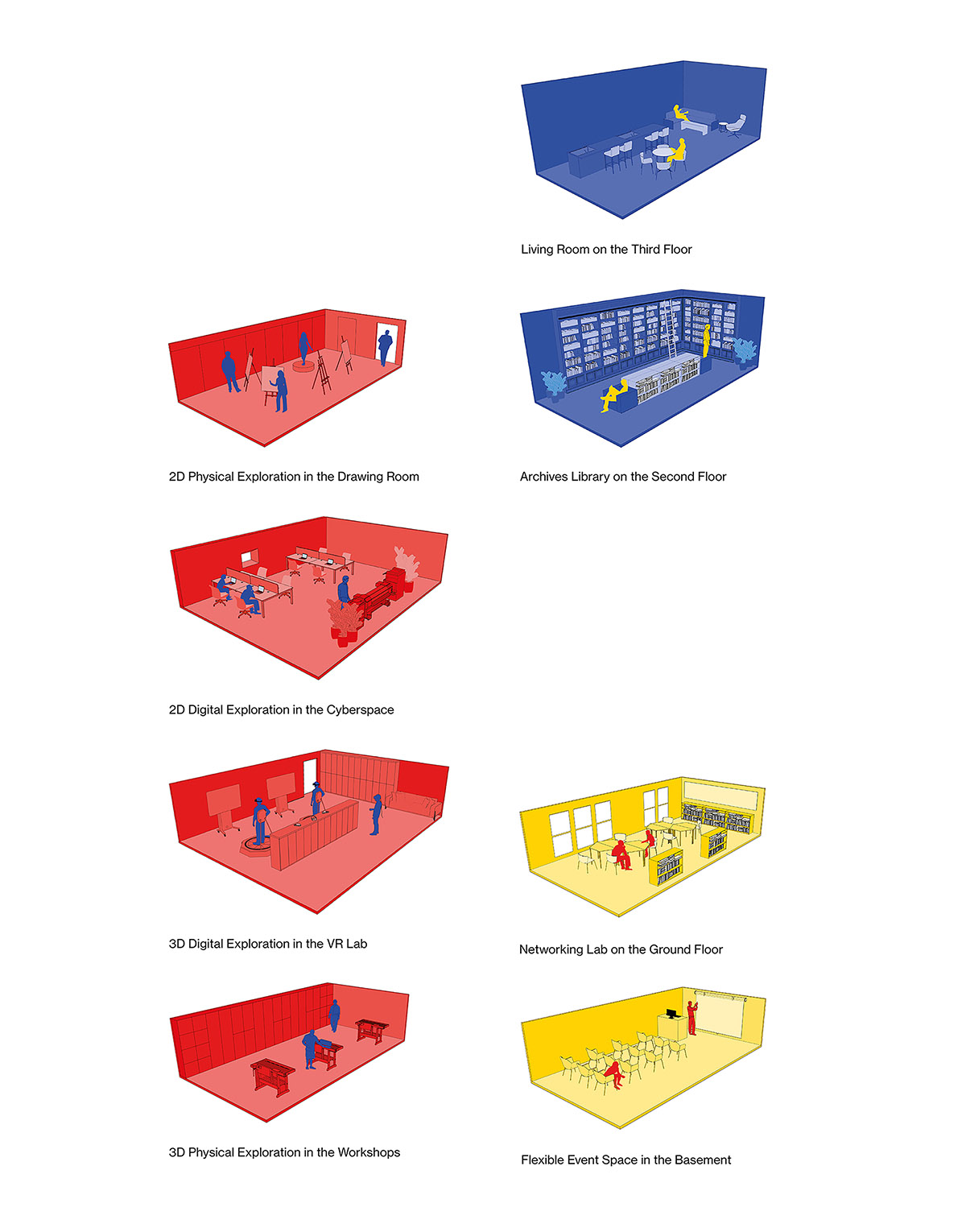
Sketches illustrating functions within key areas
Proposed Plans and Sections
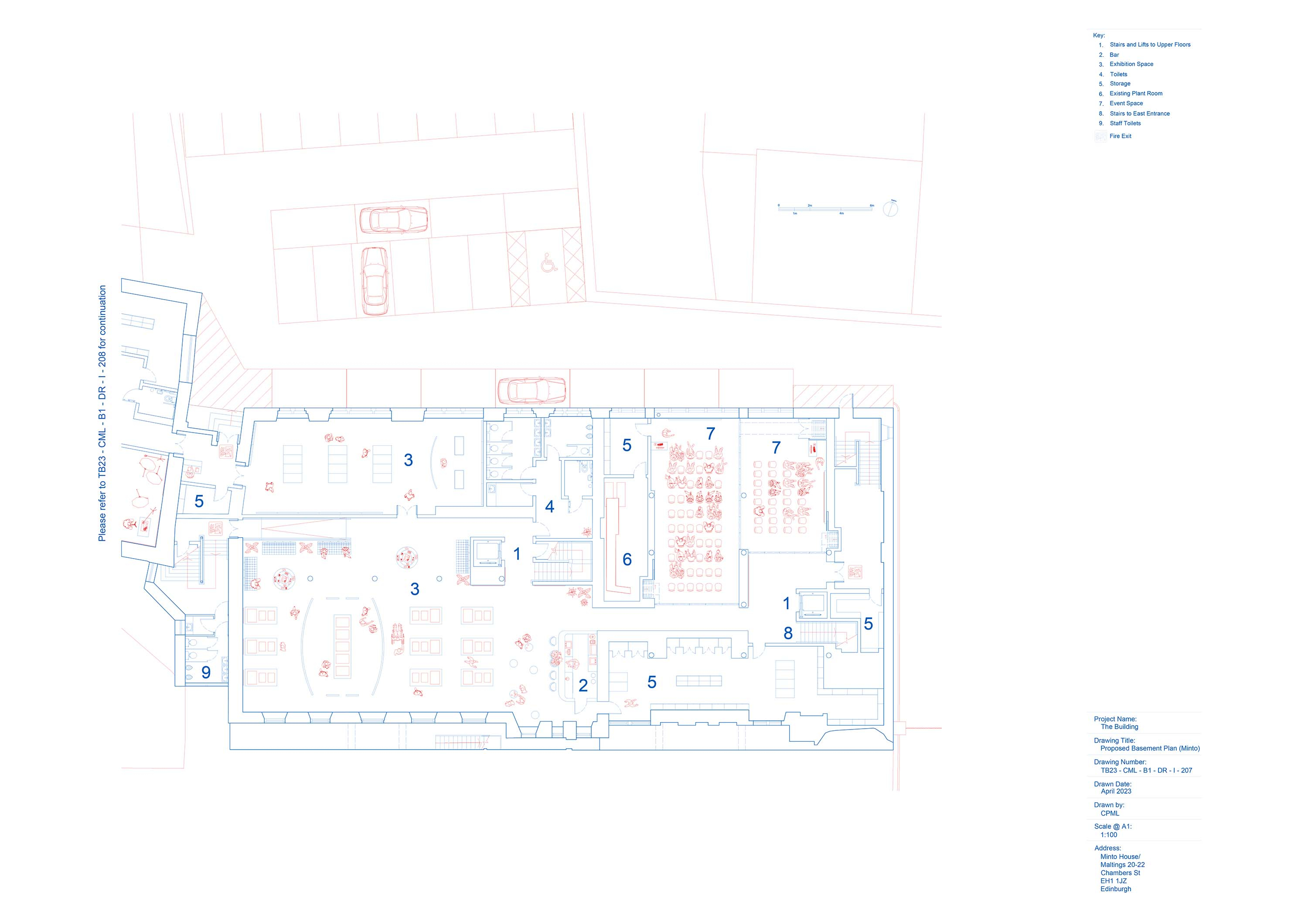
Proposed Basement Plan (Minto)
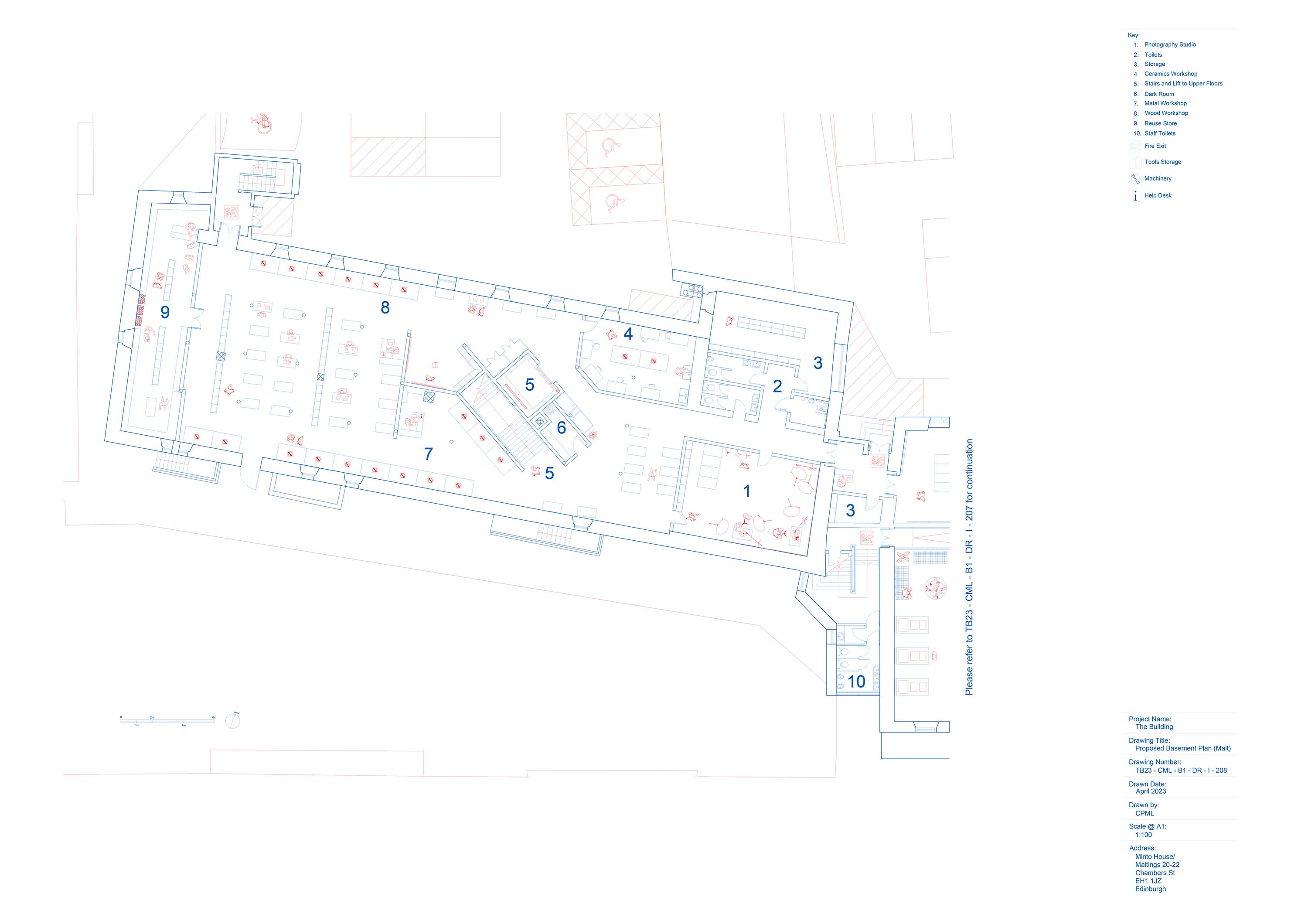
Proposed Basement Plan (Maltings)
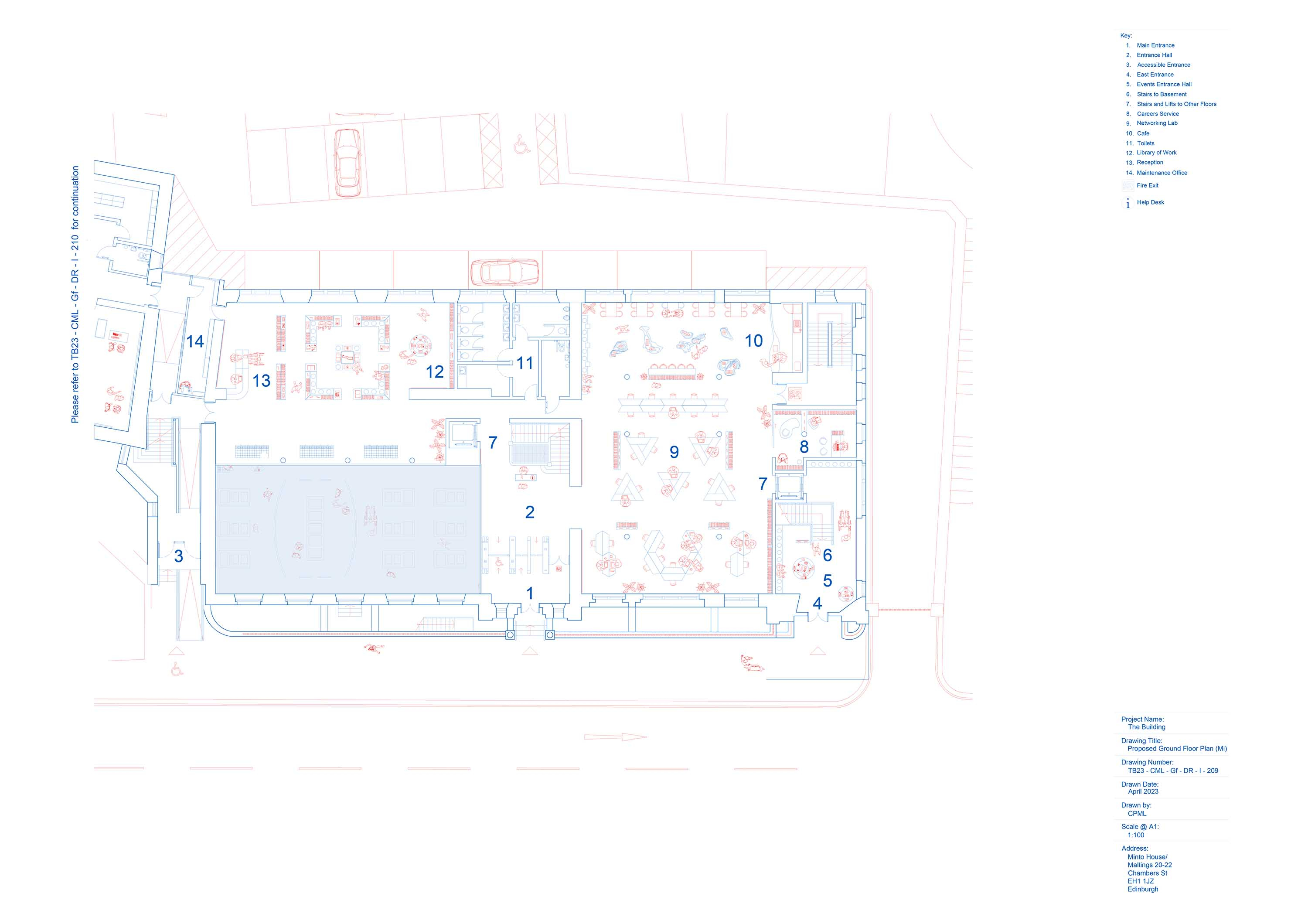
Proposed Ground Floor Plan (Minto)

Proposed Ground Floor Plan (Maltings)
Proposed First Floor Plan (Maltings)
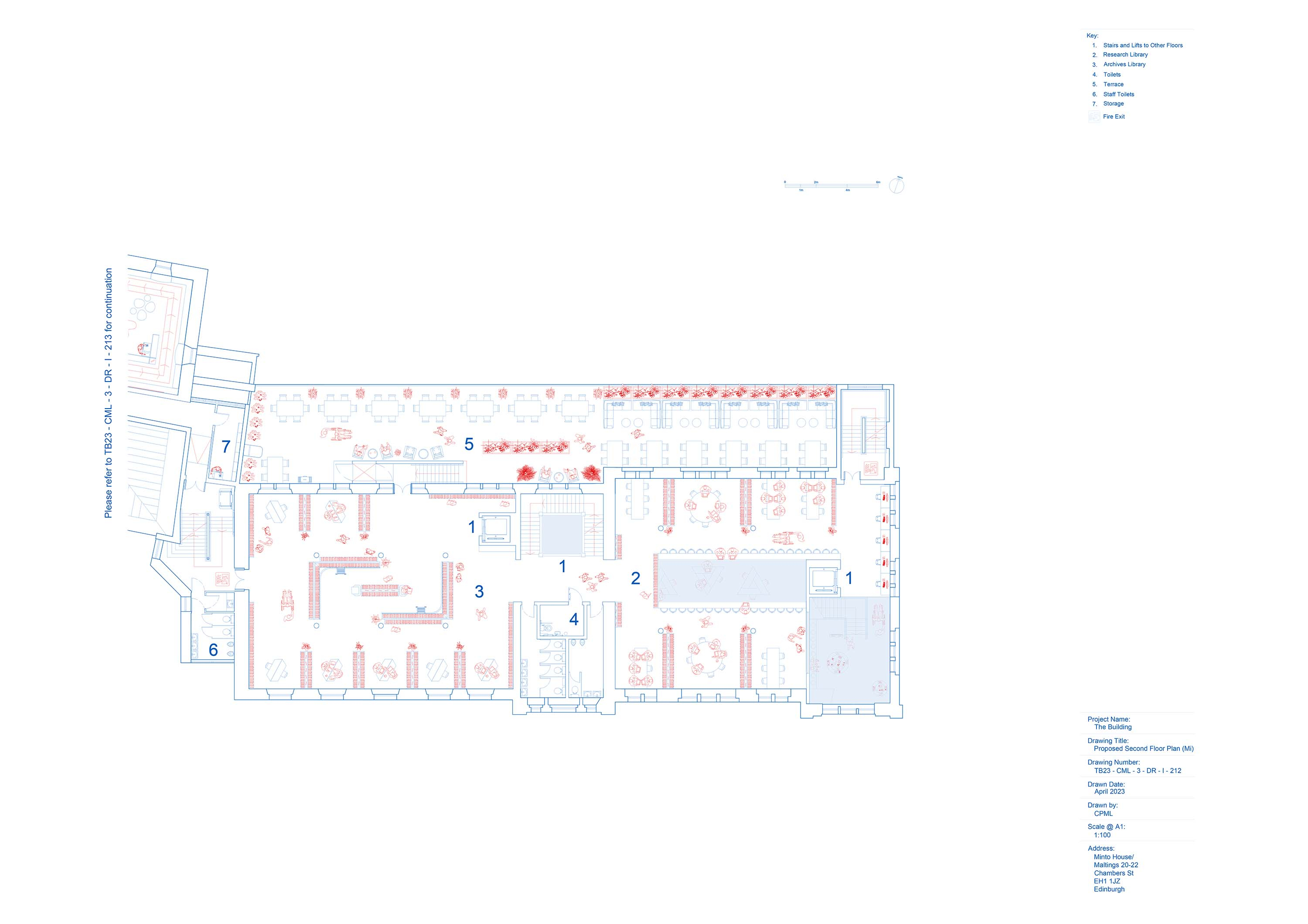
Proposed Second Floor Plan (Minto)
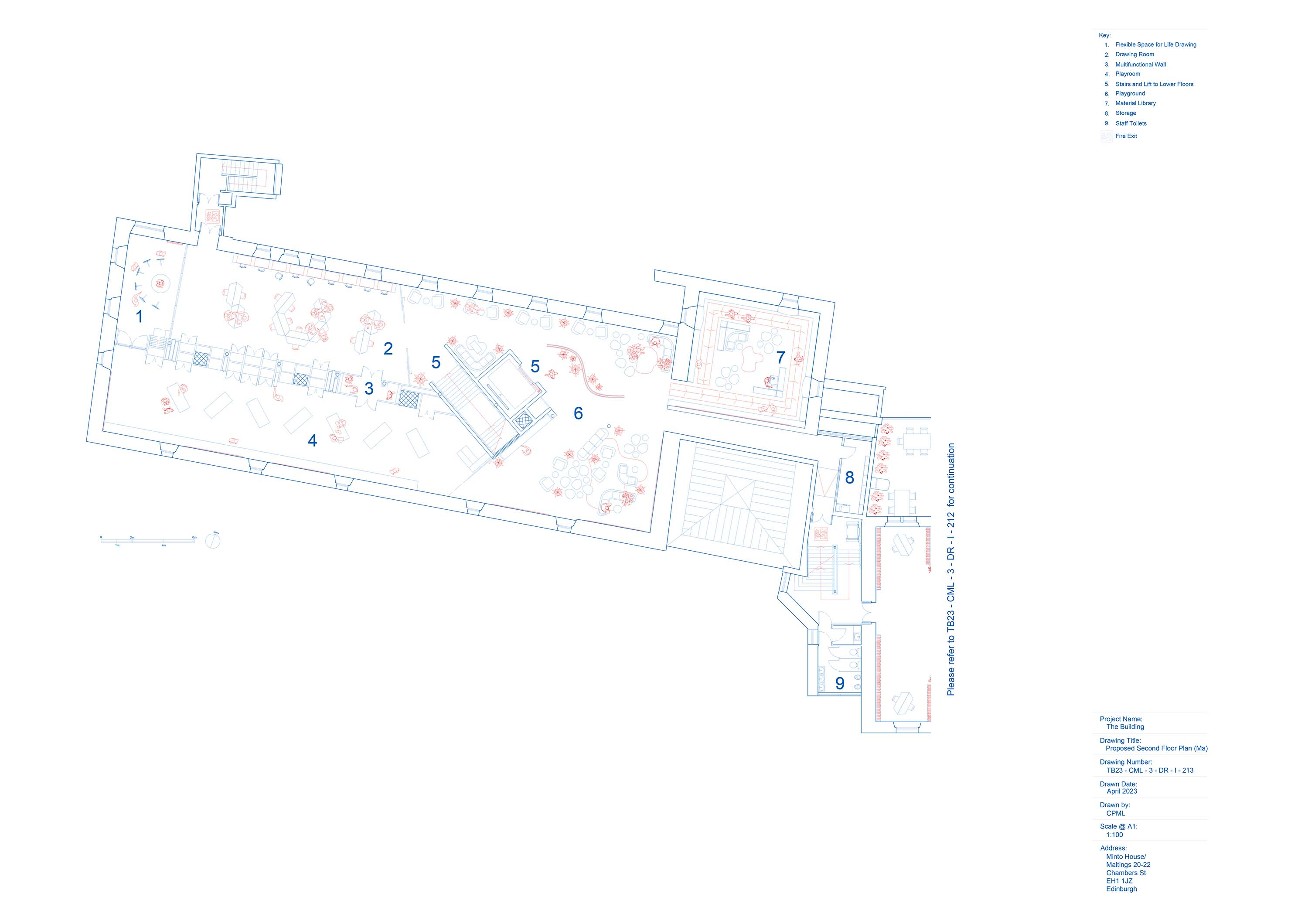
Proposed Second Floor Plan (Maltings)
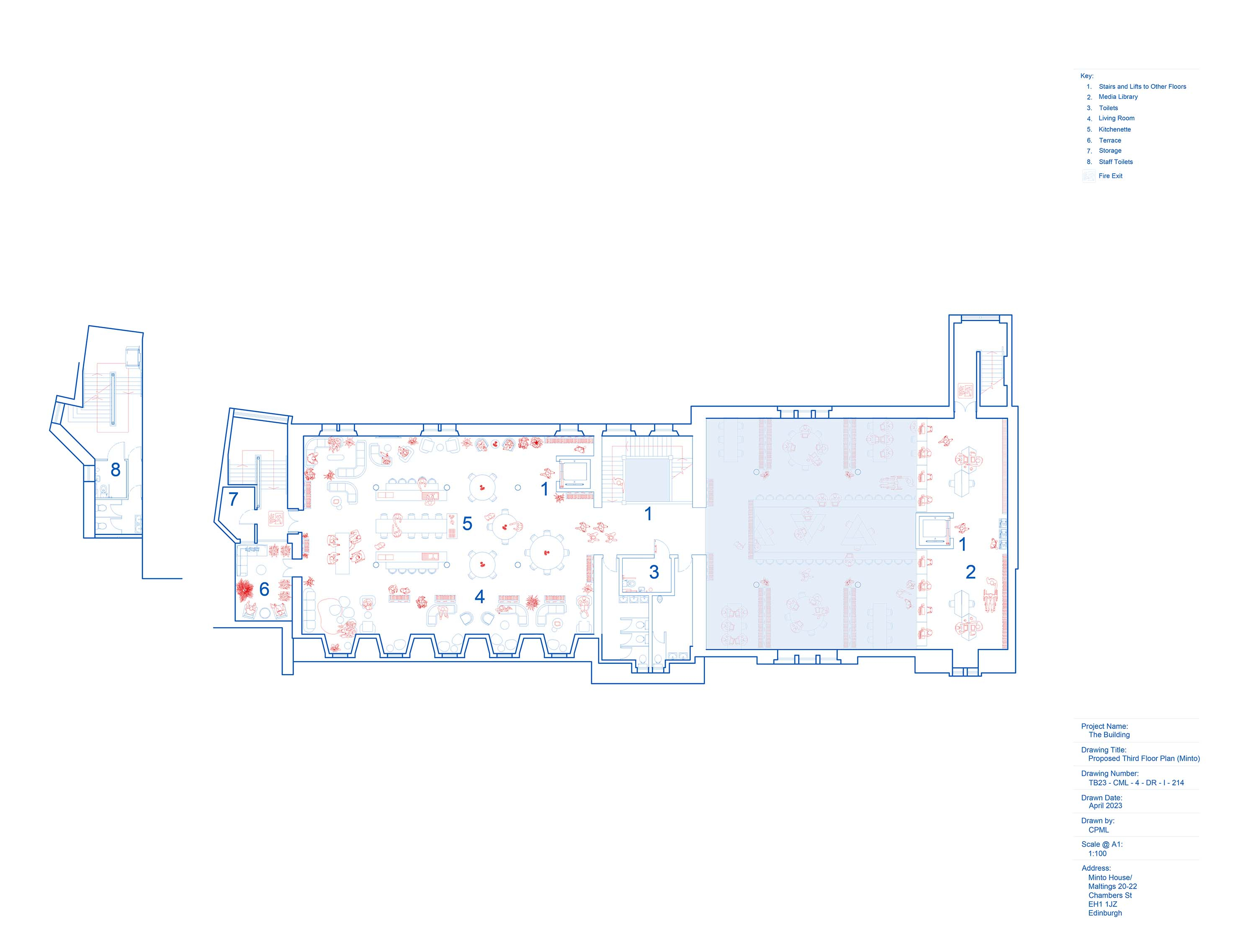
Proposed Third Floor Plan (Minto)
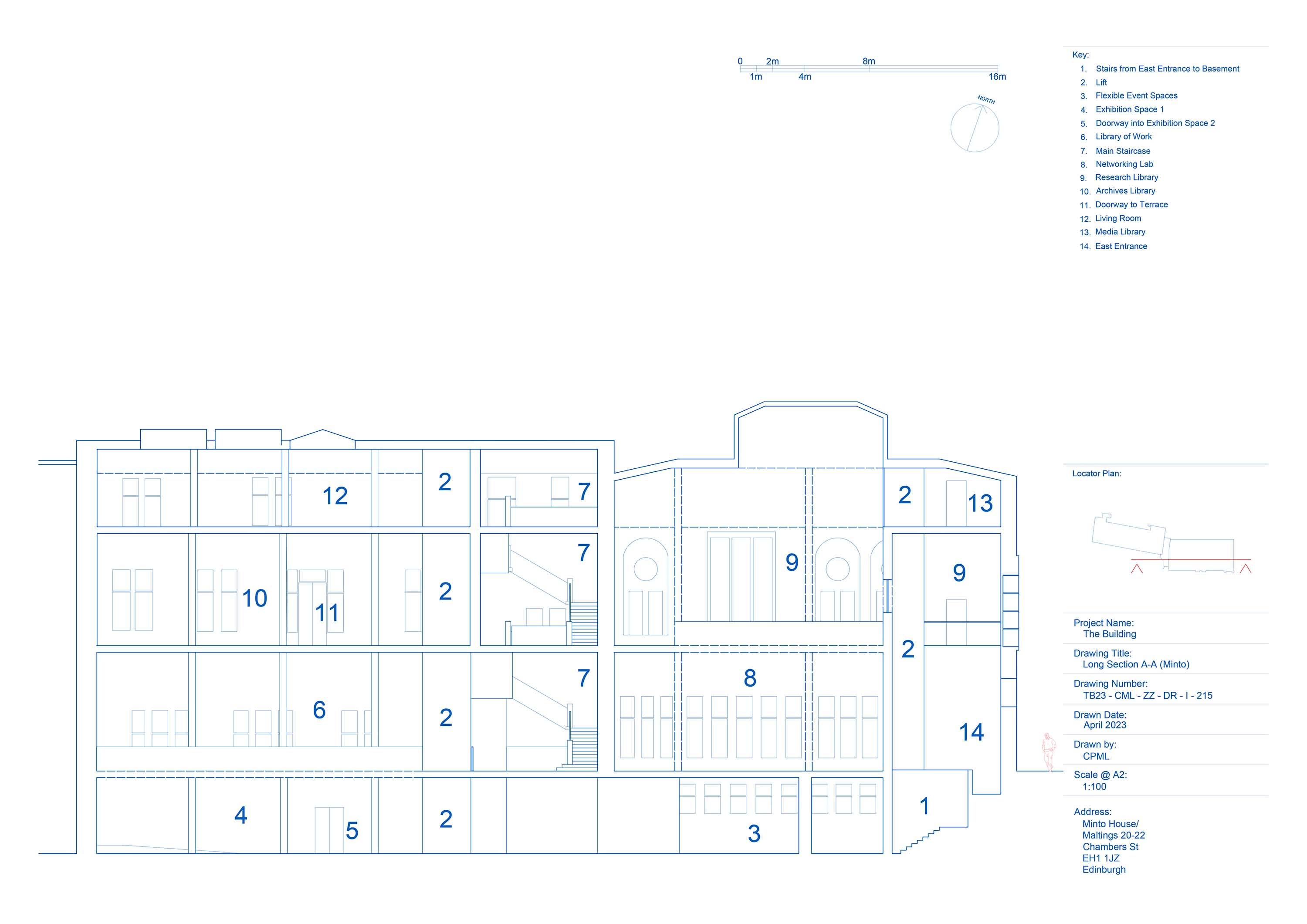
Long Section Minto
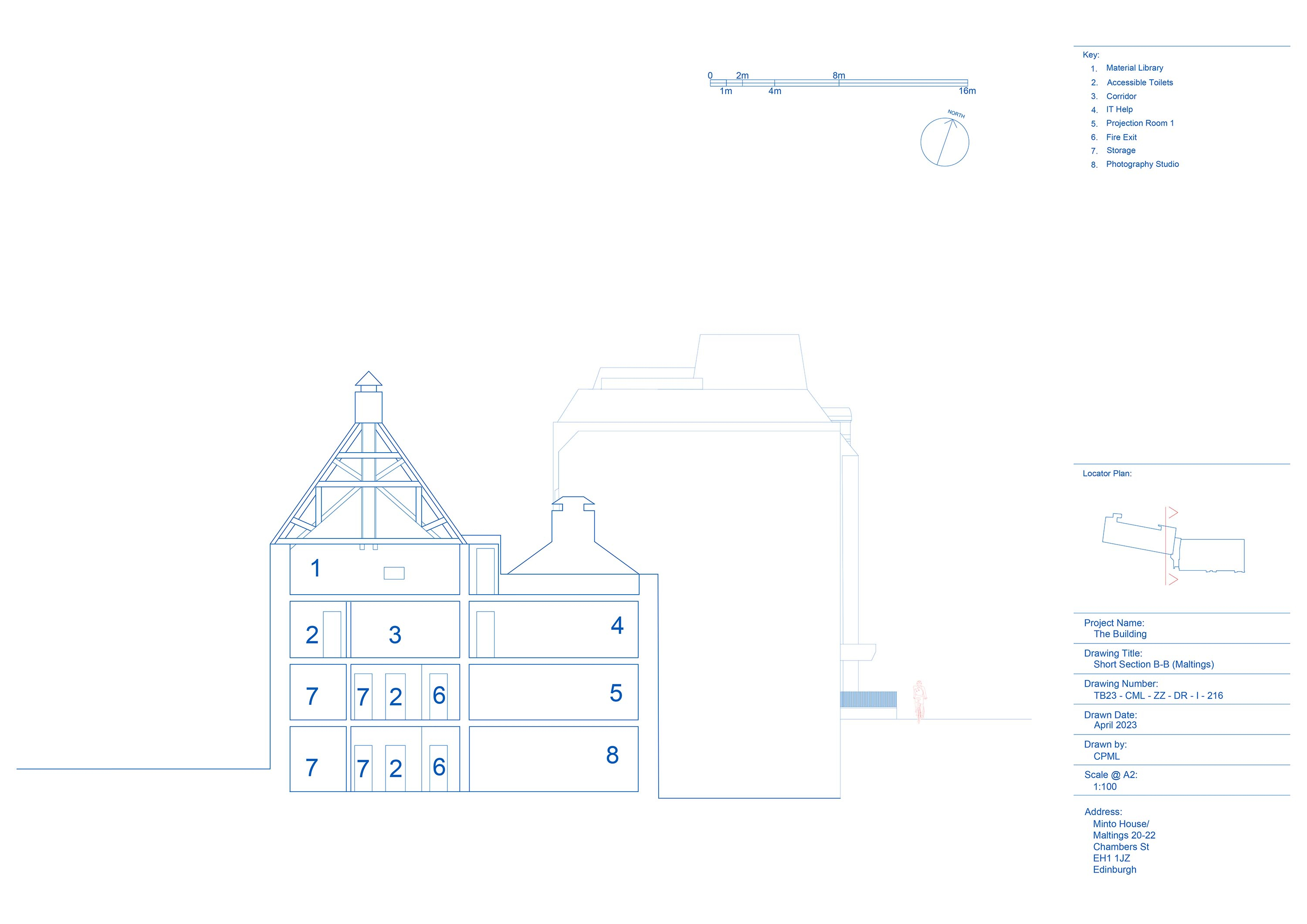
Short Section Maltings
Proposed Main Space & Detail
The chosen space is located in the second floor of the Maltings building. This floor is designed to allow students to delve into the initial stages of the design process, both individually and with others. A space that brings together all the resources needed for precedent and material research, as well as brainstorming of initial ideas. Inspired by children’s curiosity and their approach to exploration, it aims to encourage students to play and experiment with complete freedom.
Within this level, the Playroom proposes a new concept for model making. Almost like playing with toys, the building process at this stage is meant to be quick and intuitive. In this way, students can start to build a narrative and create a story board. On the other hand, the Drawing Room is dedicated for teaching traditional drawing techniques, to ensure learners continue to acquire and refine basic skills, particularly those in the early years.
The detailed design element aspires to work with the existing structural columns that support the roof to provide a solution that enables a clear division between the two spaces. The multifunctional wall proposed allows for storage of shared materials and ongoing work by the students, whilst also introducing opportunities for connection between the two areas.
Proposed Main Space Detail Drawings
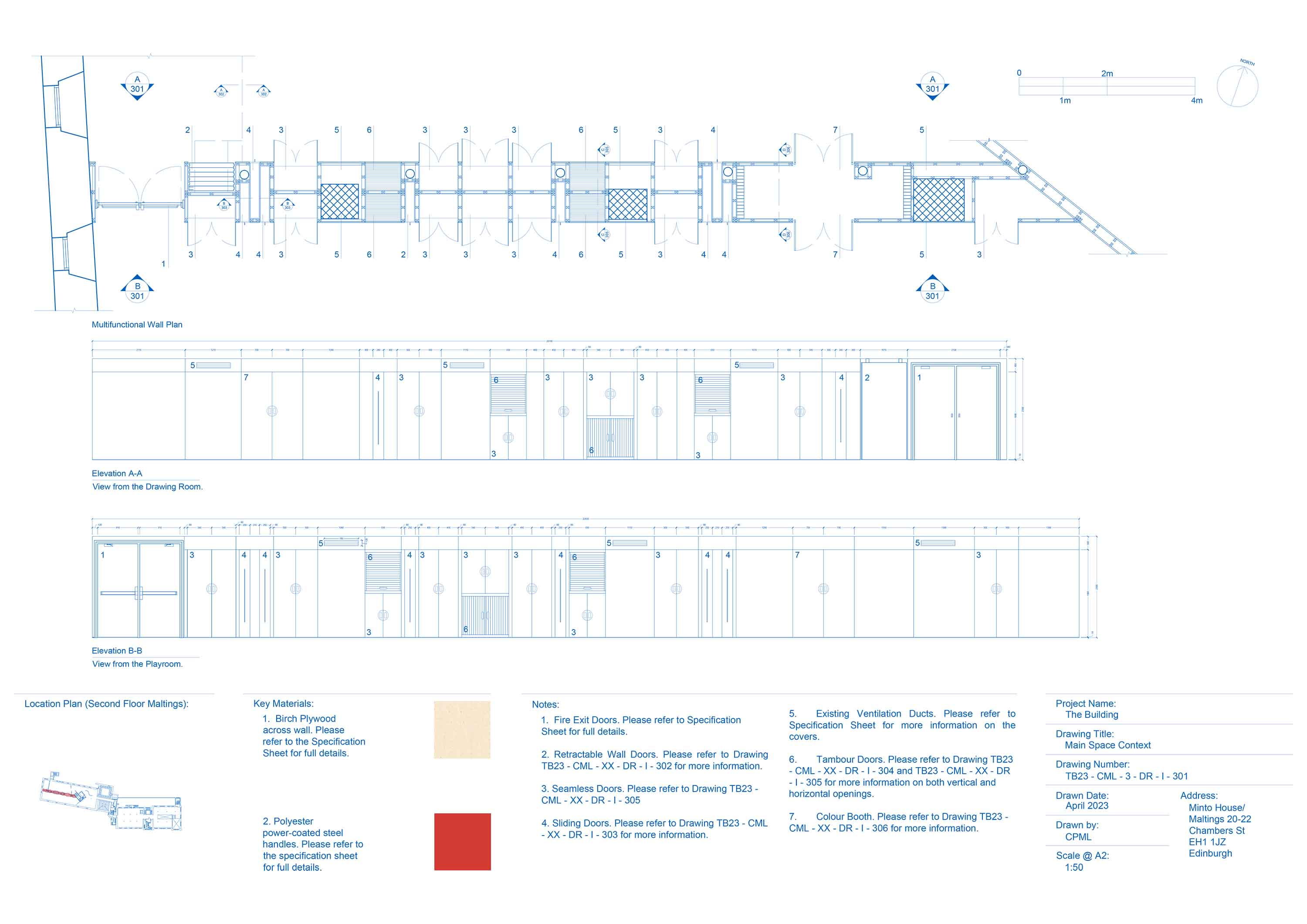
Main Space Detailing Context
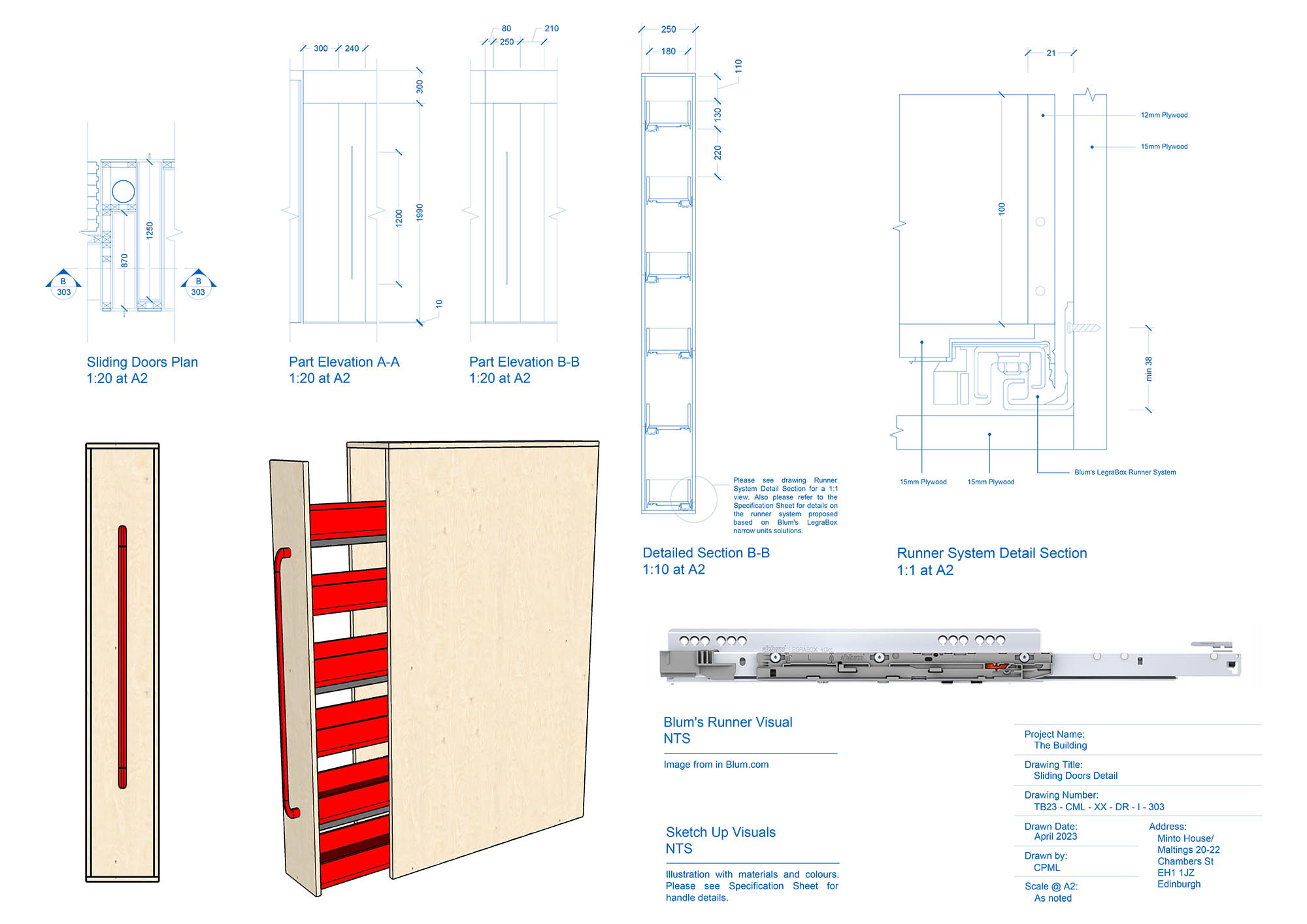
Main Space Detail 01
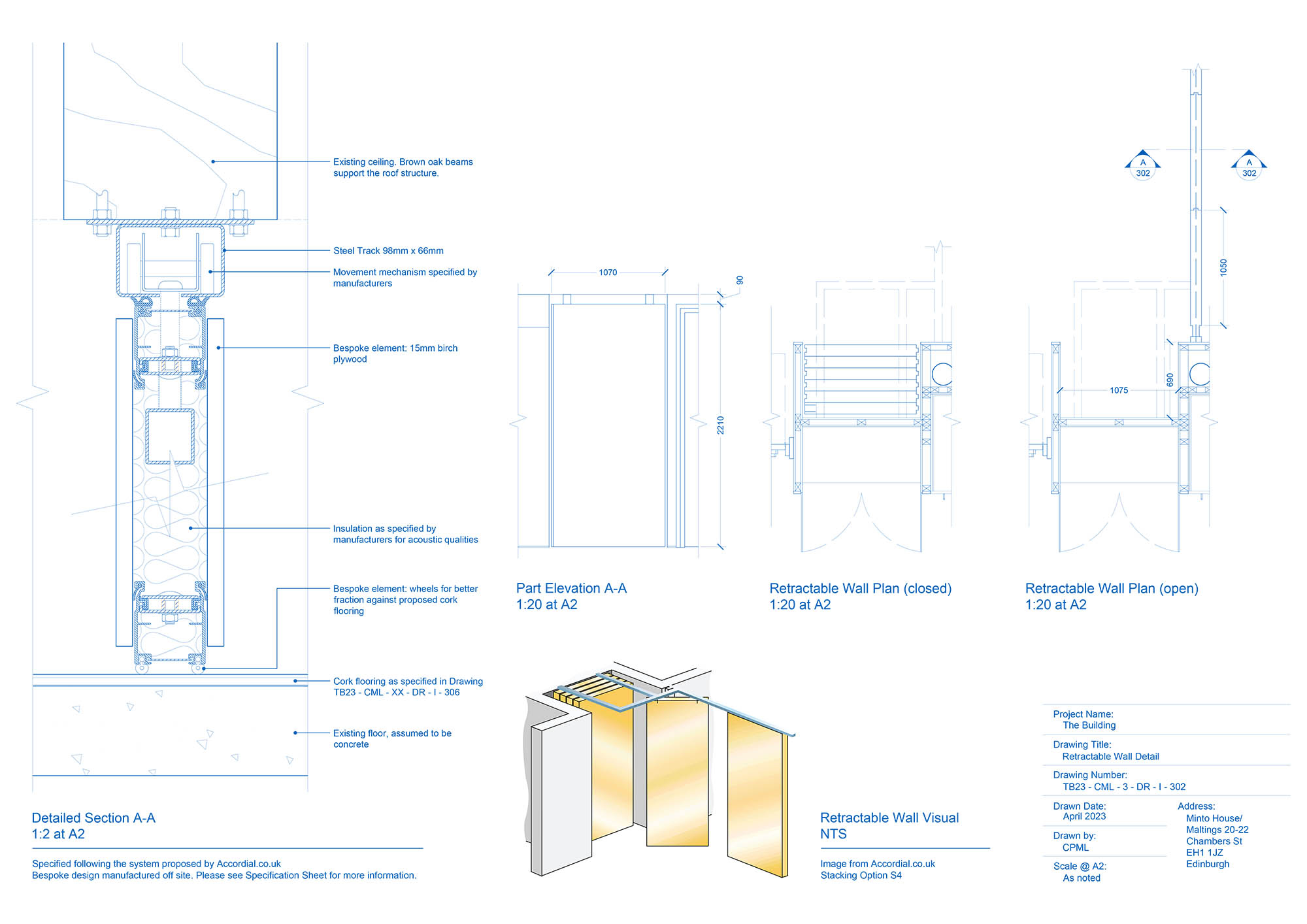
Main Space Detail 02
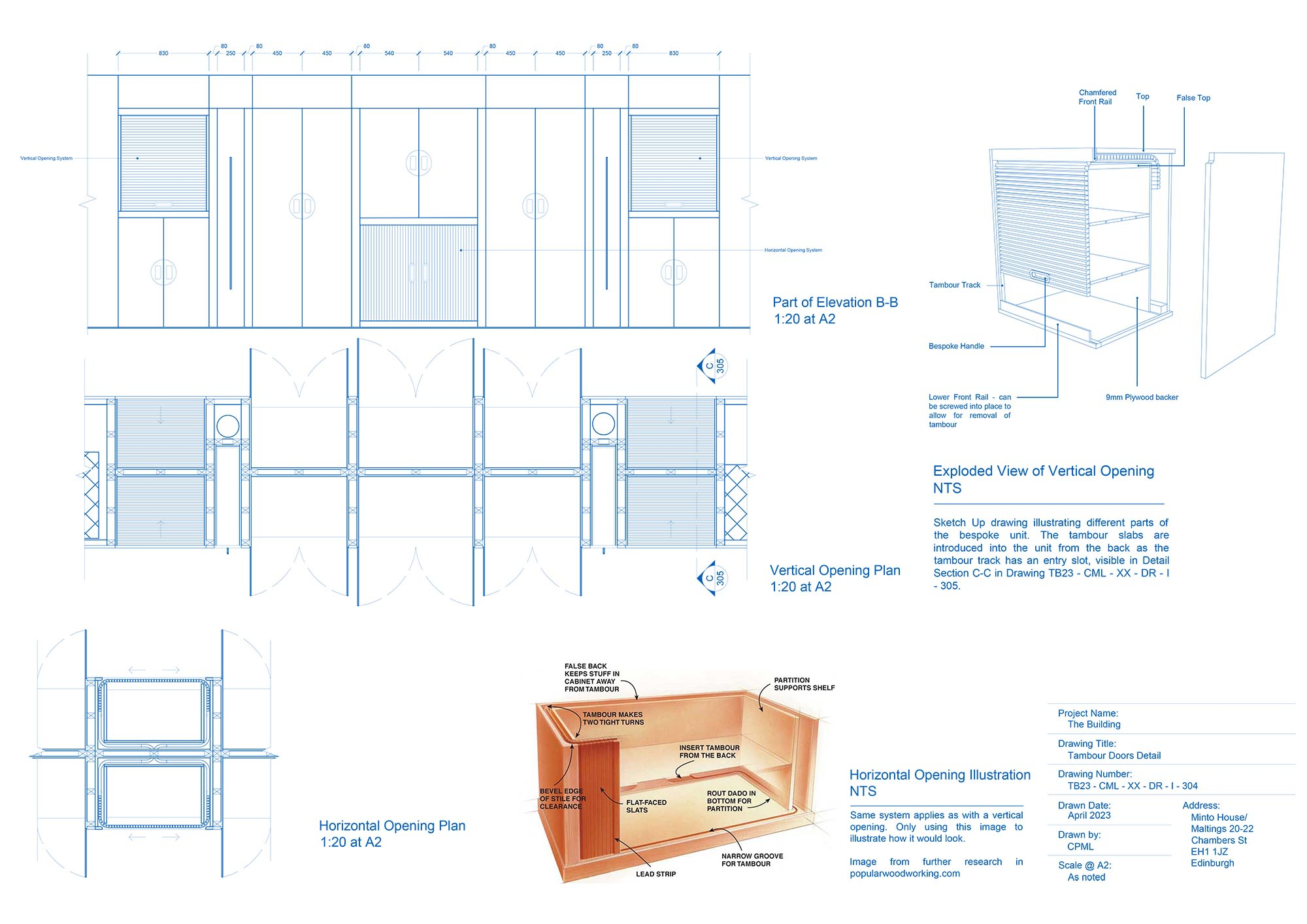
Main Space Detail 03
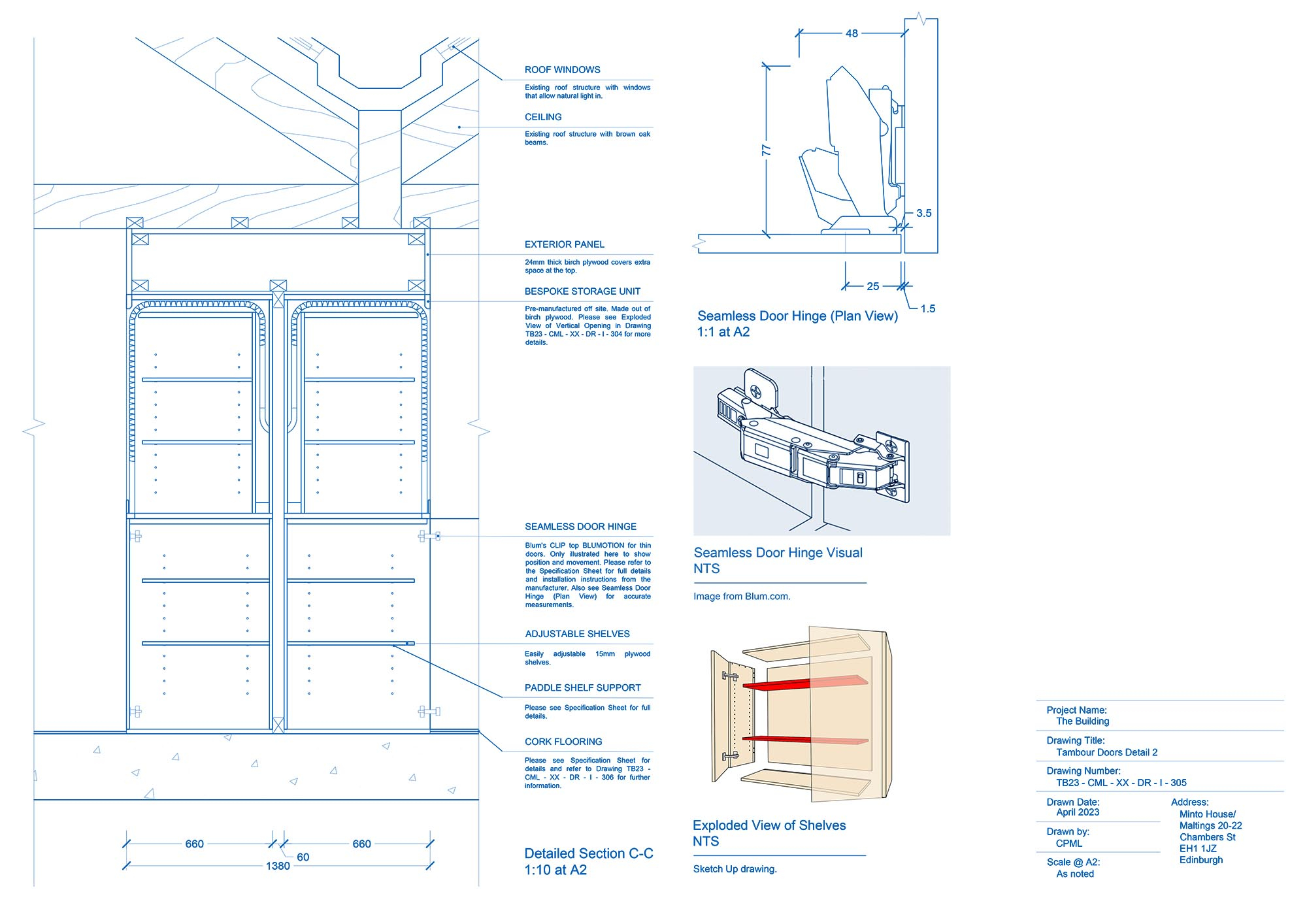
Main Space Detail 04
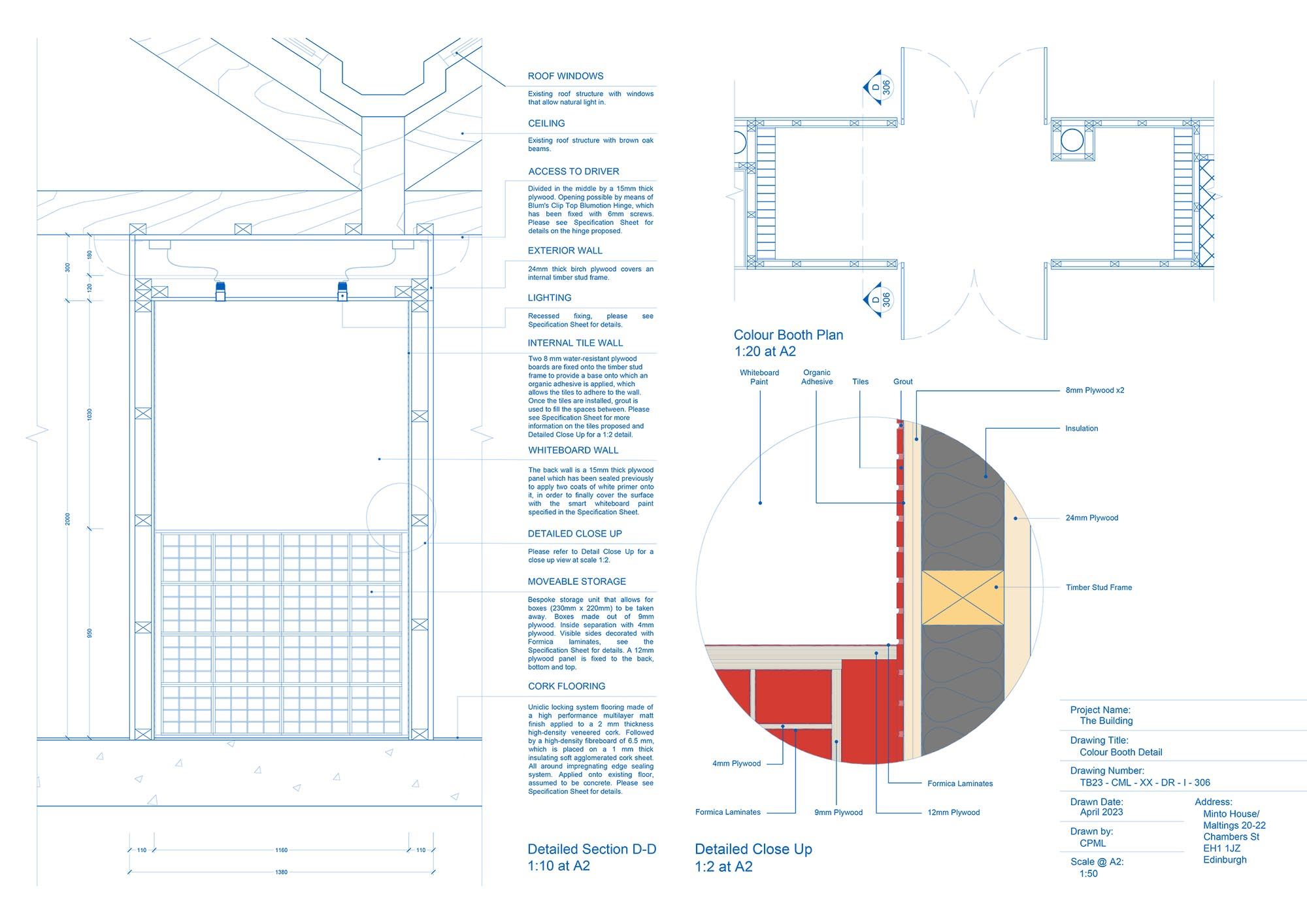
Main Space Detail 05


Claudia Maude
The Building
Follow:
Share:

