

There is no current cure for Alzheimer’s, but medications are available to help with symptoms. One of the most efficient ways to treat Alzheimer’s is a combination of pharmacological support and safely designed environments. Having a diagnosis of a disease with no current cure can cause emotional trauma - not only for the individual directly affected but also for the family. LOOP was created in the hope of changing this so that families and individuals can be supported through the diagnosis and symptoms of early-onset Alzheimer’s. LOOP is a day center where families can reunite and engage in everyday activities in a specialised setting - something they may not be able to do anymore within a non-specialised environment. It feels like home, rather than a clinical setting, where independence is supported and promoted, not hindered. The project name ‘LOOP’ refers to the user's journey throughout the building. A clear, visible spatial layout aids users, along with strategic coloring, so that they feel confident to explore and find their way back, always keeping them ‘in the loop.’


Alice Quigley


Project description
Concept
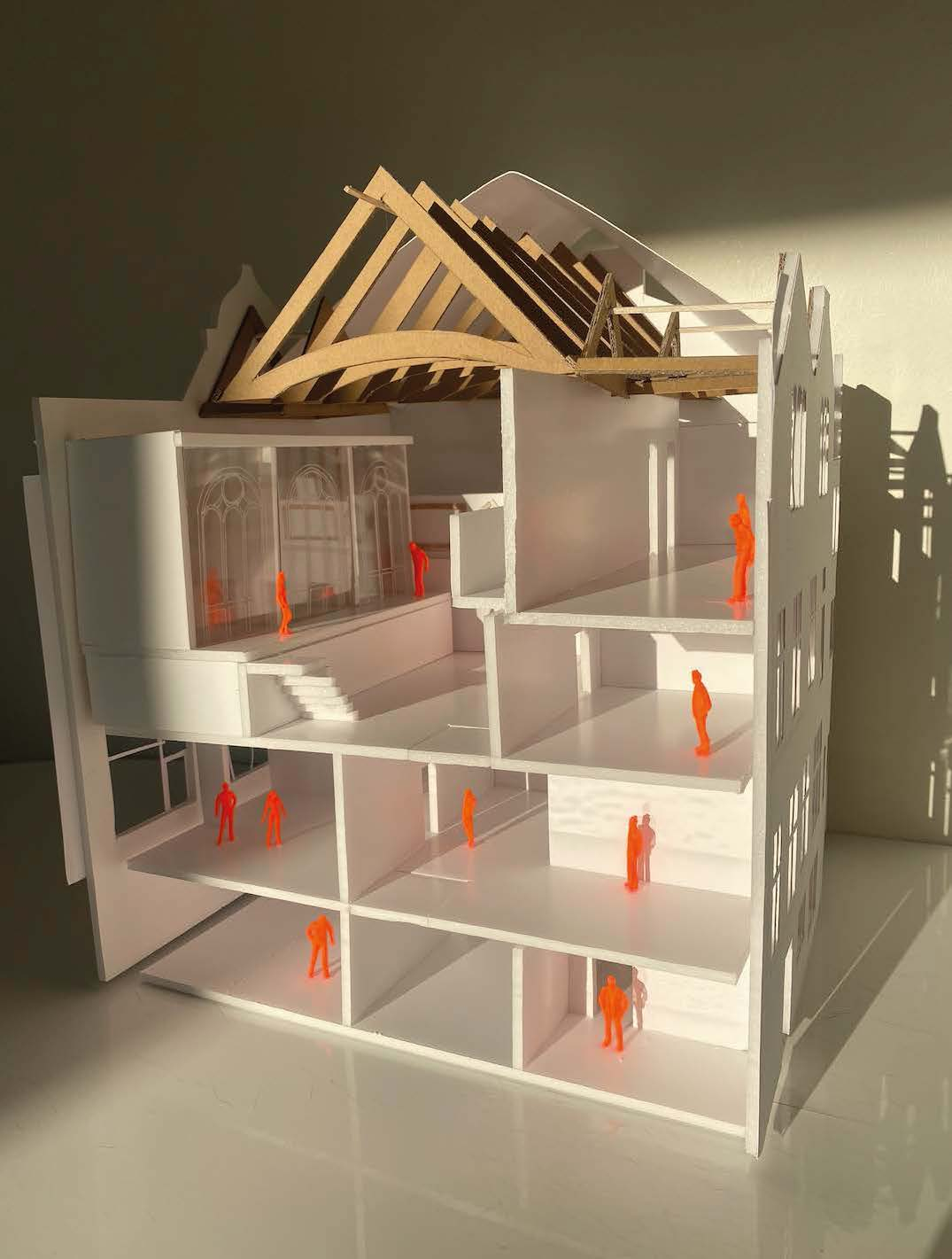
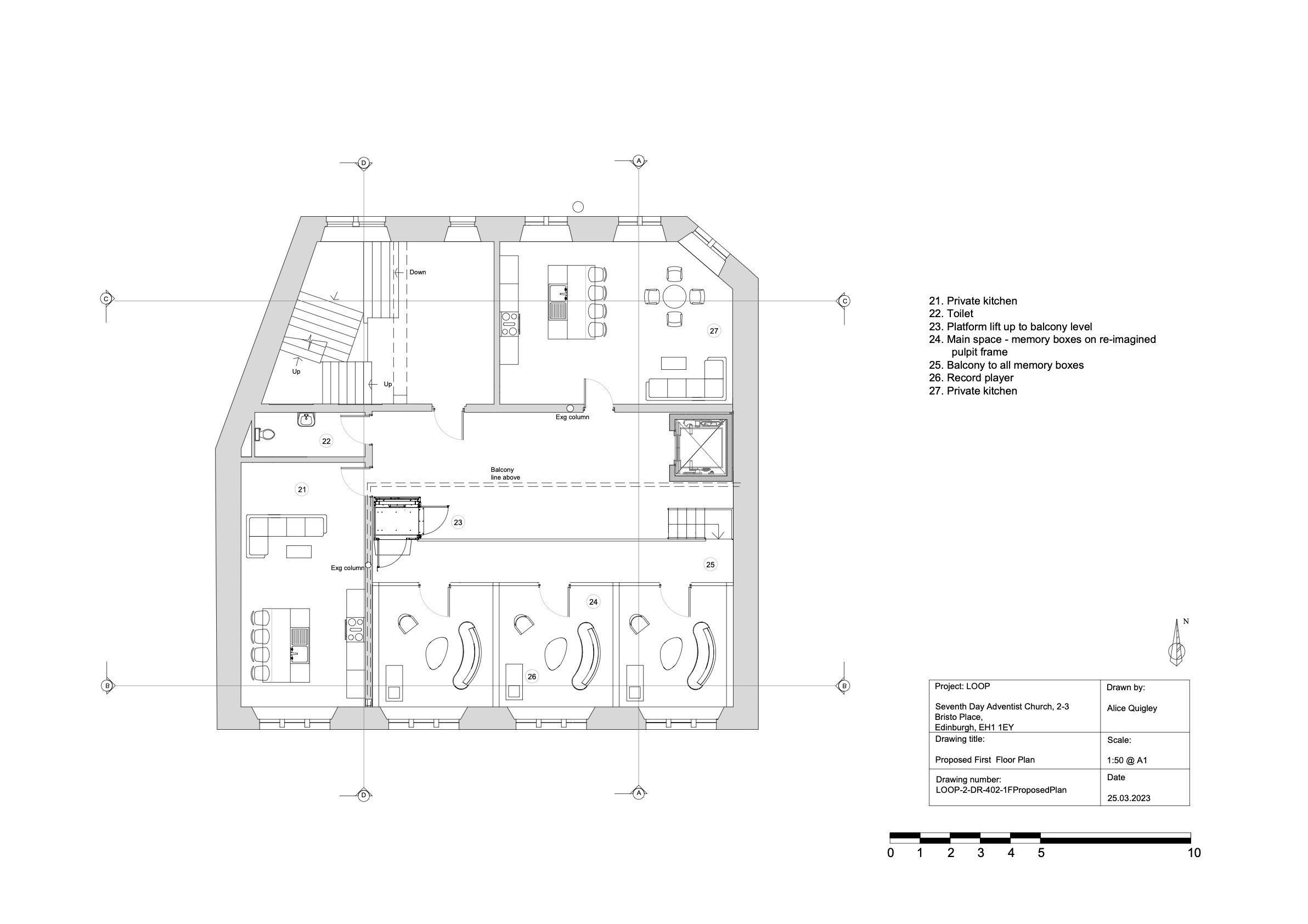
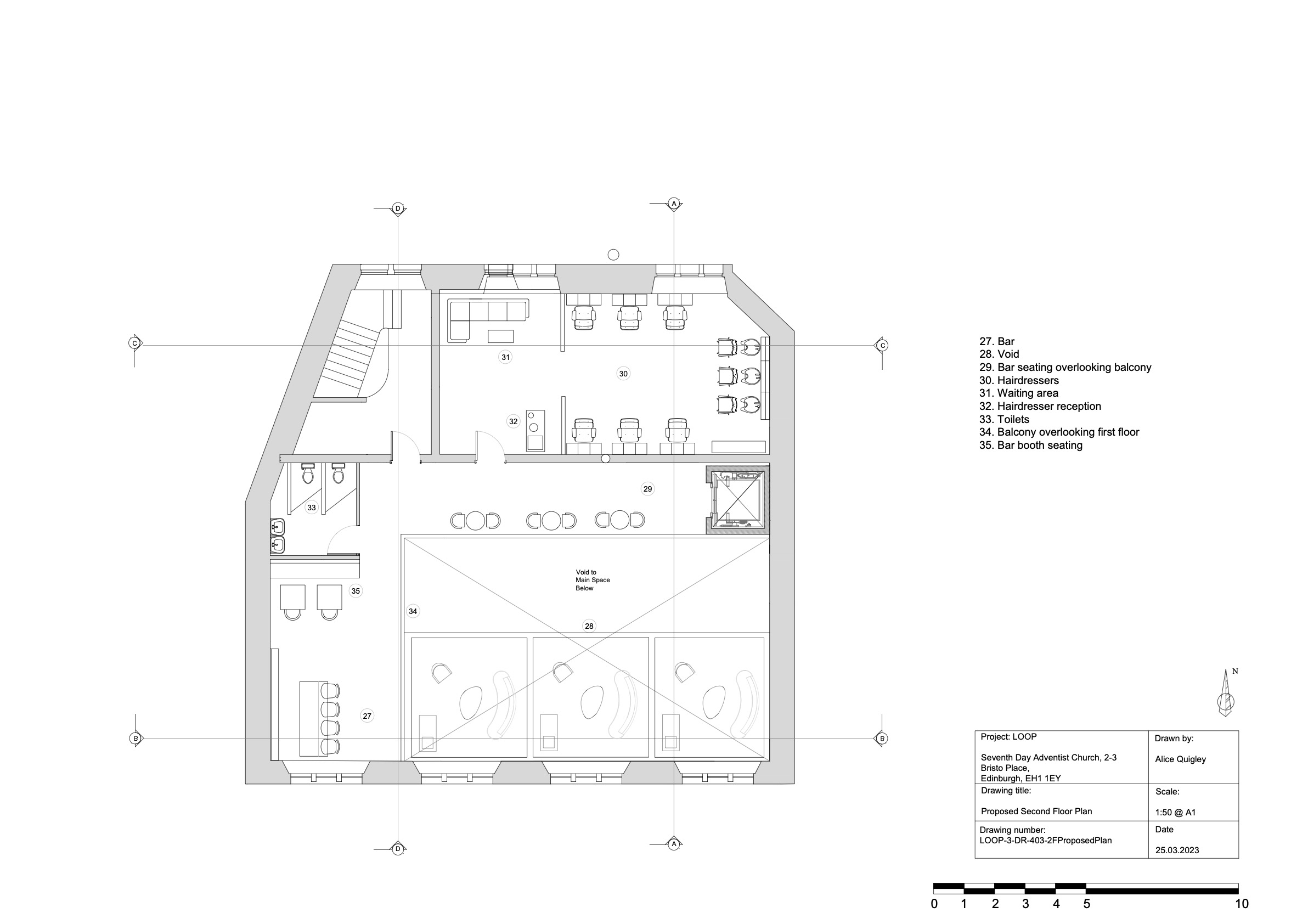
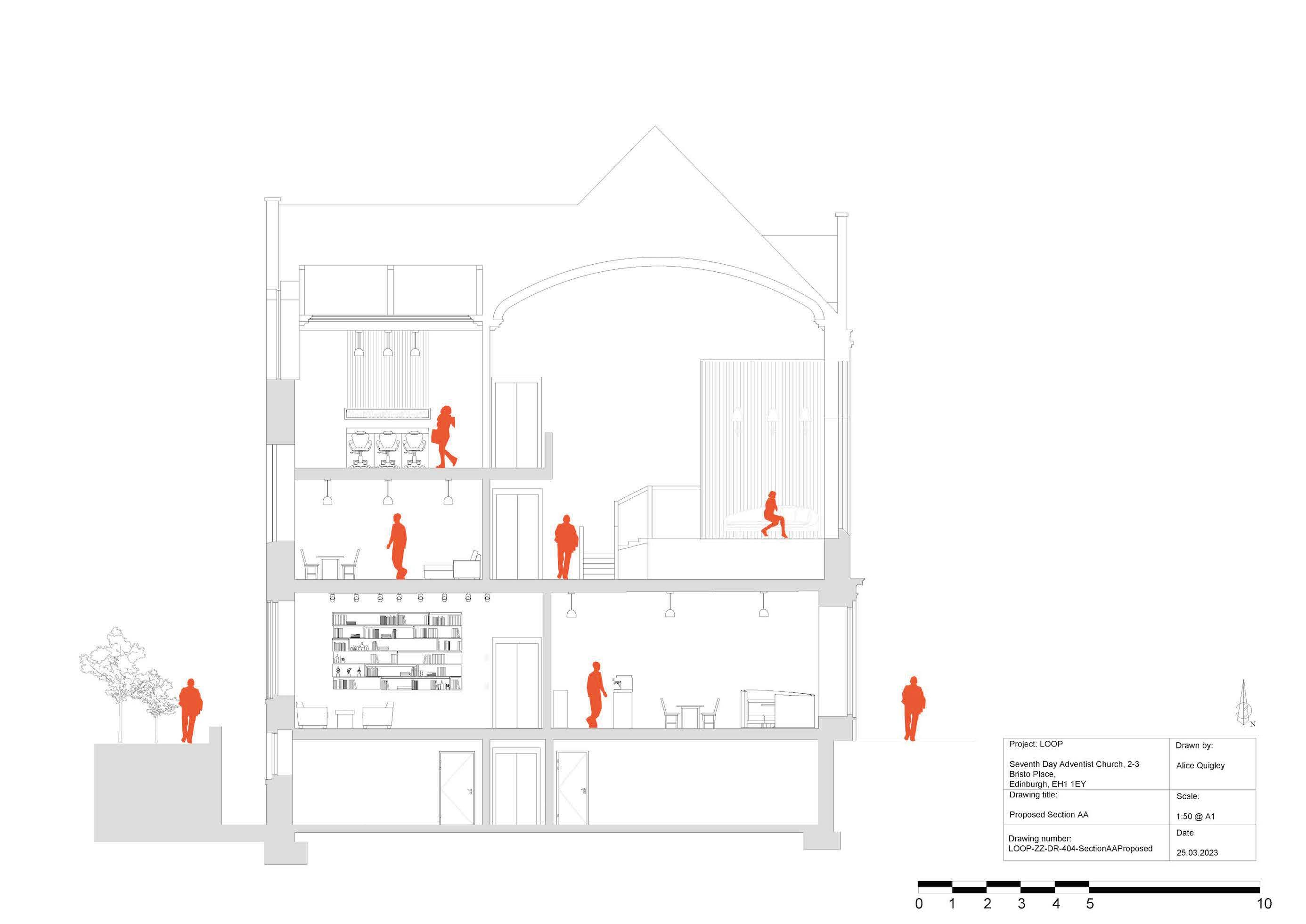
The driving force behind LOOP is supporting those with Early-onset Alzheimer’s and their families. Alzheimer’s is an incredibly complex disease, with many varying symptoms and subtypes, making designing an interior for those suffering within the context of one building difficult. Using evidence-based design combined with a user-centered approach, a meaningful design journey unraveled. When deciding how to occupy the site, it was clear from the research that public and private spaces for visitors were necessary to create the feeling of ‘familiar.’ Staff areas are kept completely separate, as locked doors and ‘dead ends’ can be of great frustration. An Alzheimer-friendly cafe occupies the ground floor, with all aspects visible and easy to locate. Private kitchens and music boxes inhabit the first floor, opening back up to public spaces on the second with a bar and hairdressers.

Context
Early-onset Alzheimer's typically affects younger people, leading to more specific issues and symptoms which can be targeted through environmental adaptations. Specialised environments for those with specific medical issues, such as Alzheimer’s, are often overlooked due to economic issues, time, and space. But, because there is no current cure, considerable attention is required regarding designing environments for those with Alzheimer’s.

Site
Former Seventh Day Adventist Church 2- 3 Bristo Place, Edinburgh, EH1 1EY
Status: Category B Listed
Architects: Sydney Mitchell and Wilson (1899-1900)
Area: 659m2
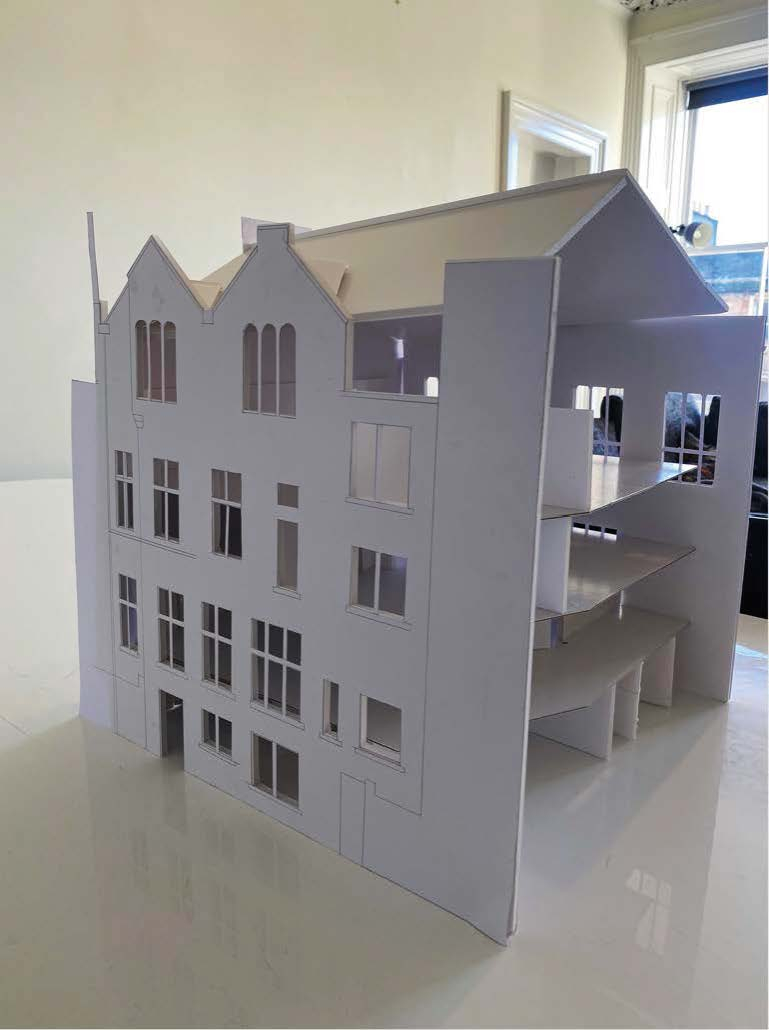
One of the most important elements when selecting a site was a building that is centrally located with efficient transport links. It had to be somewhere easily accessible for families, somewhere clear. I also did not want to select a site that was too big, so confusion was not caused. So, 2-3 Bristo place was chosen.


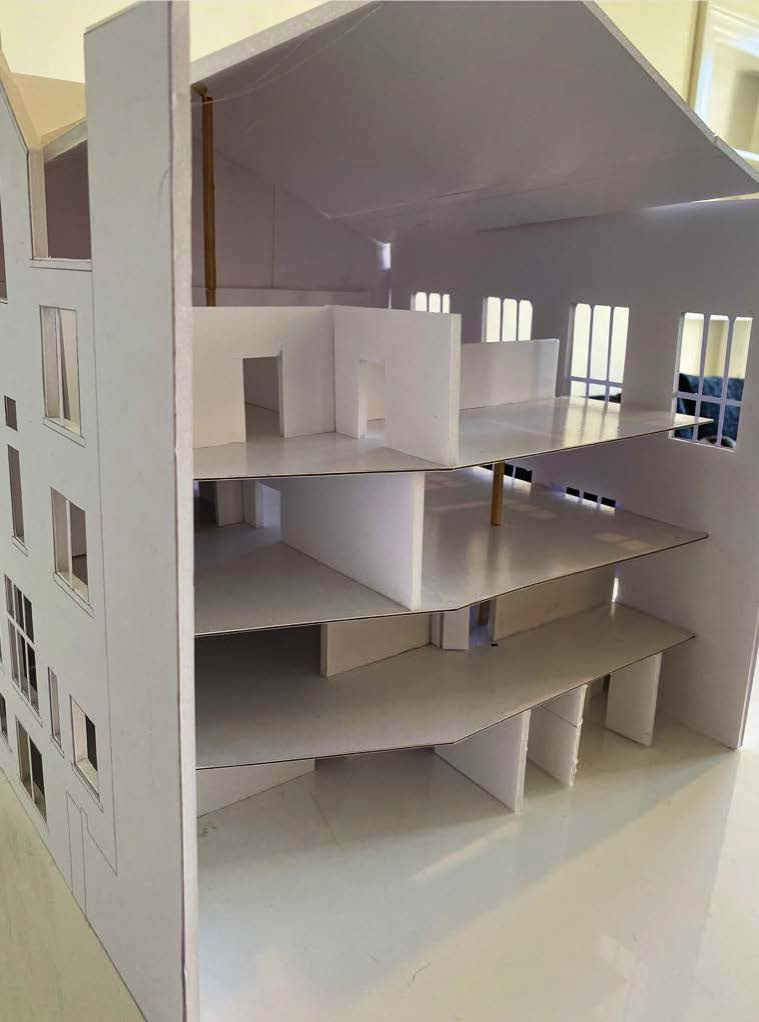
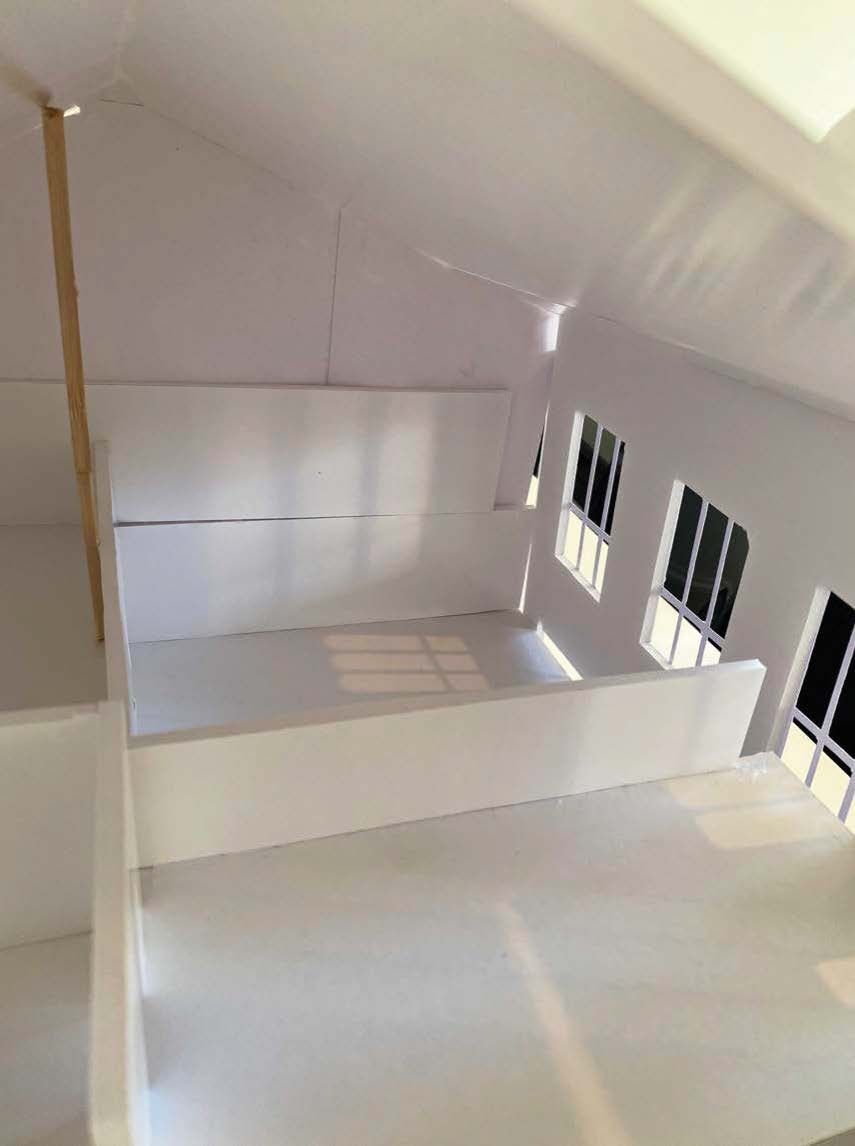
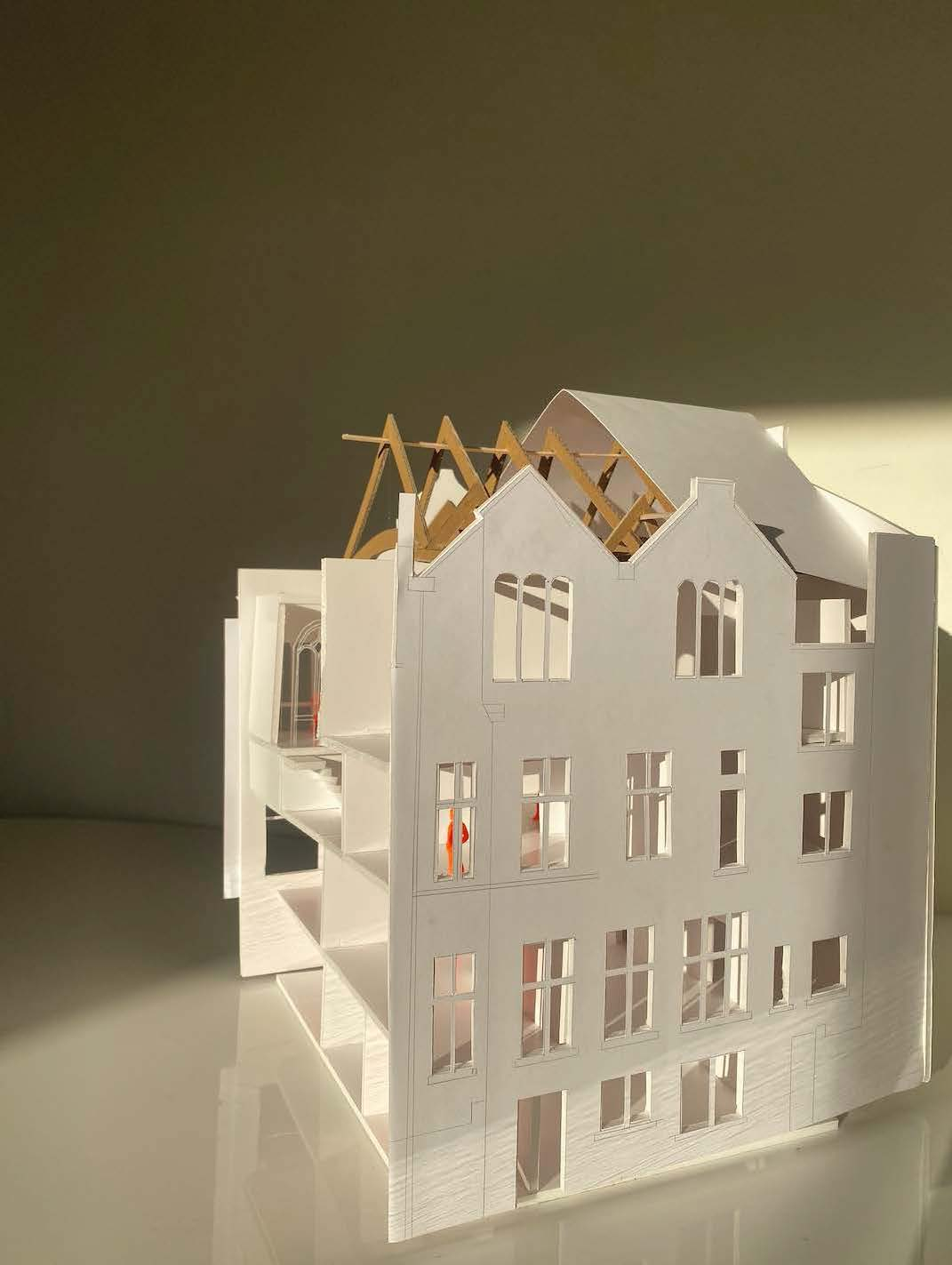
Existing Structure Model

Visuals


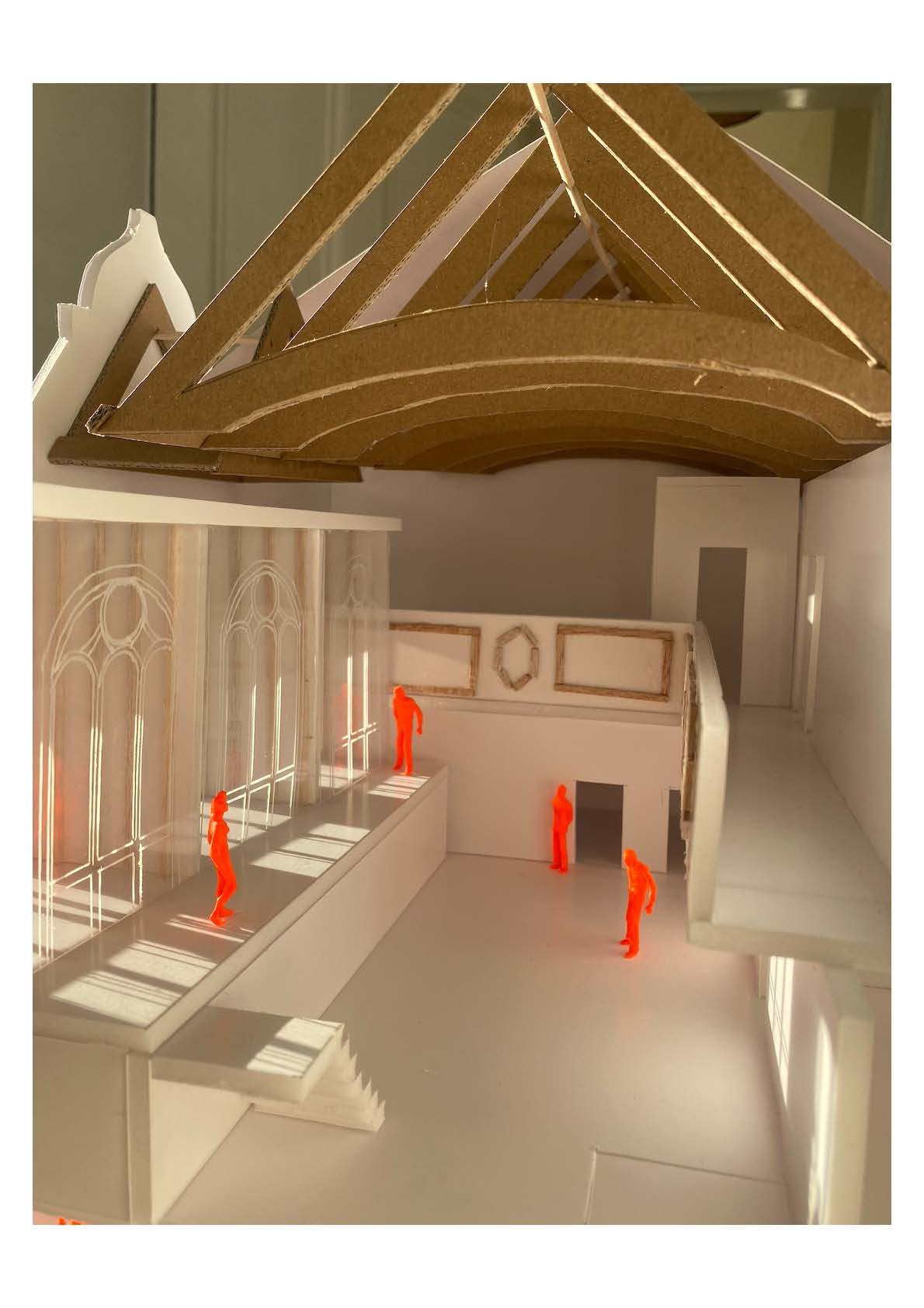
Proposed Model

Proposals

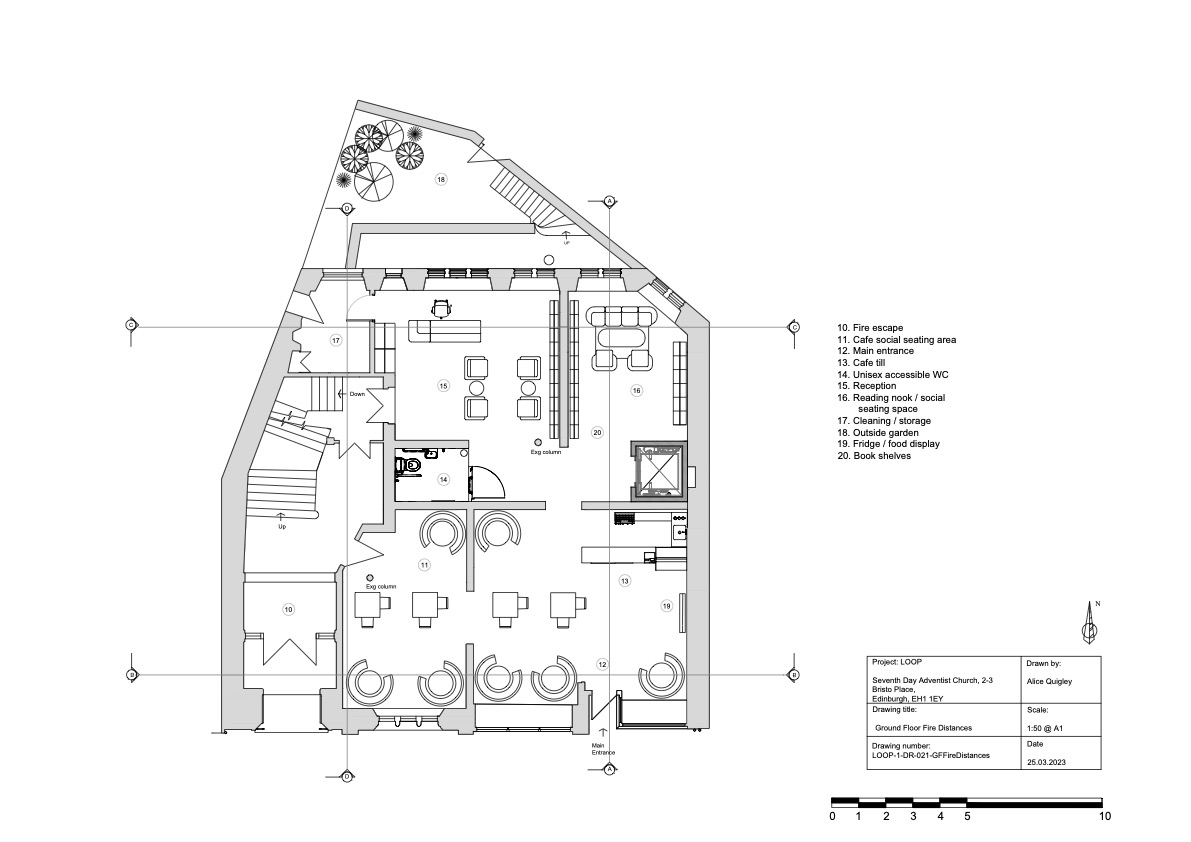


Main Space & Details
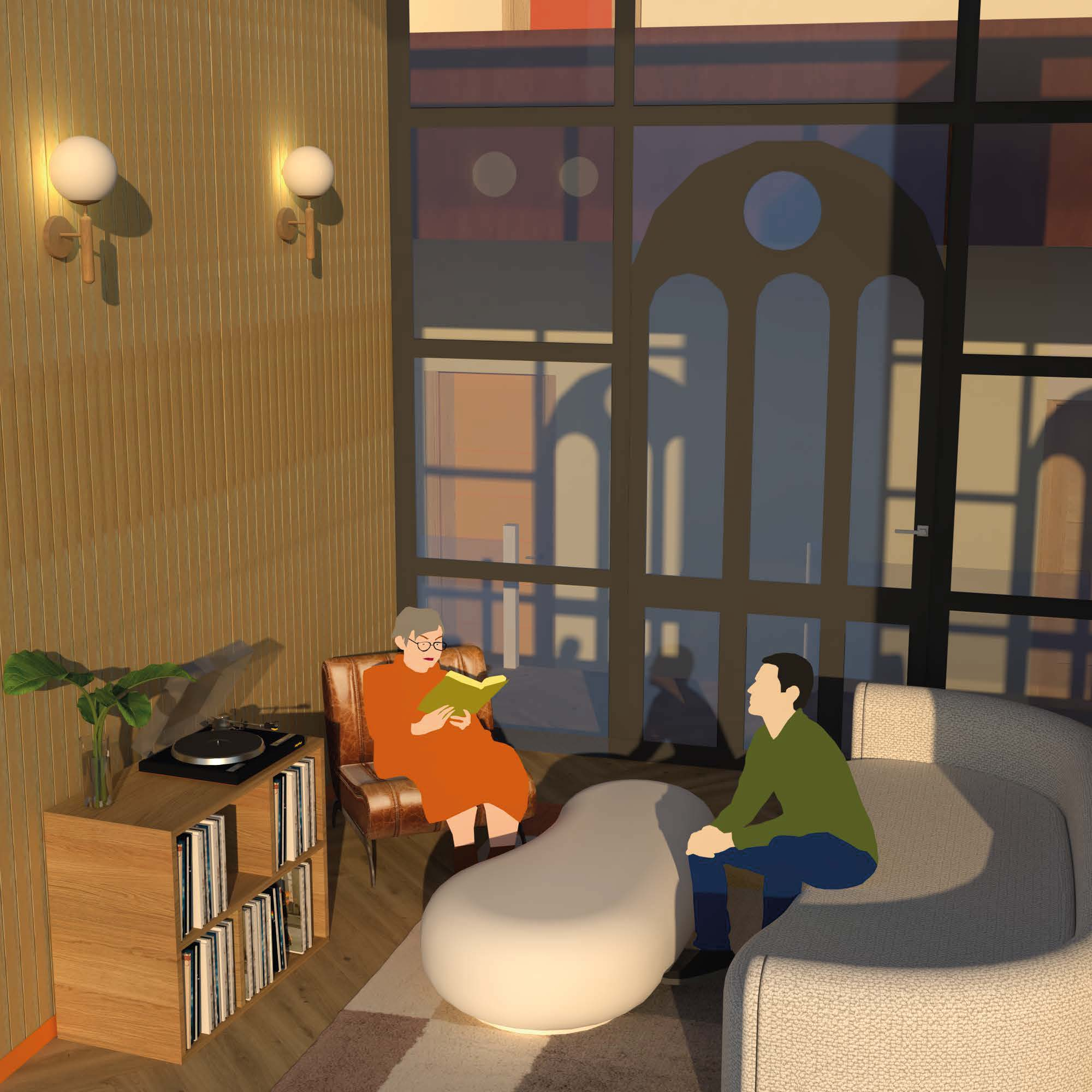
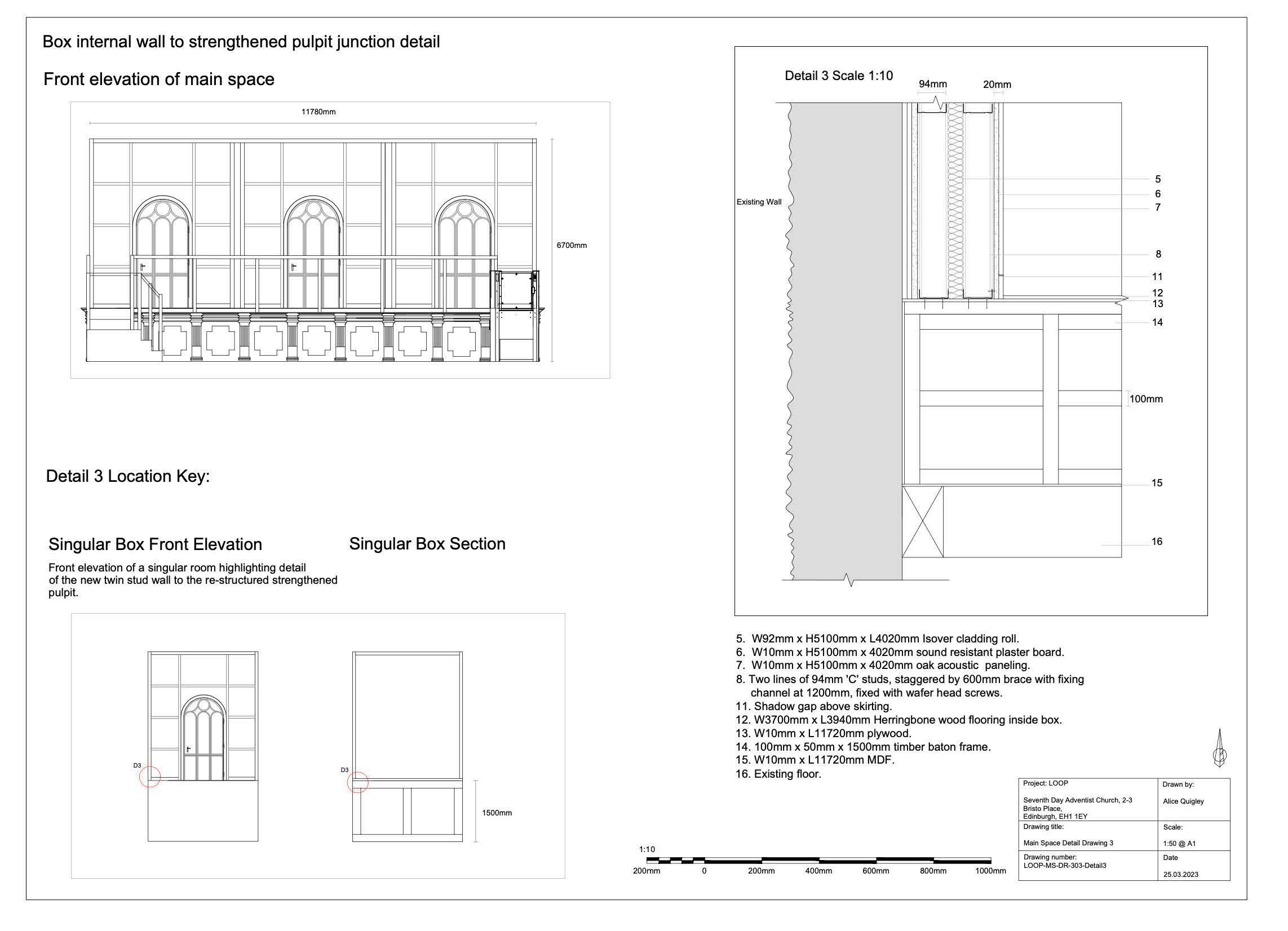
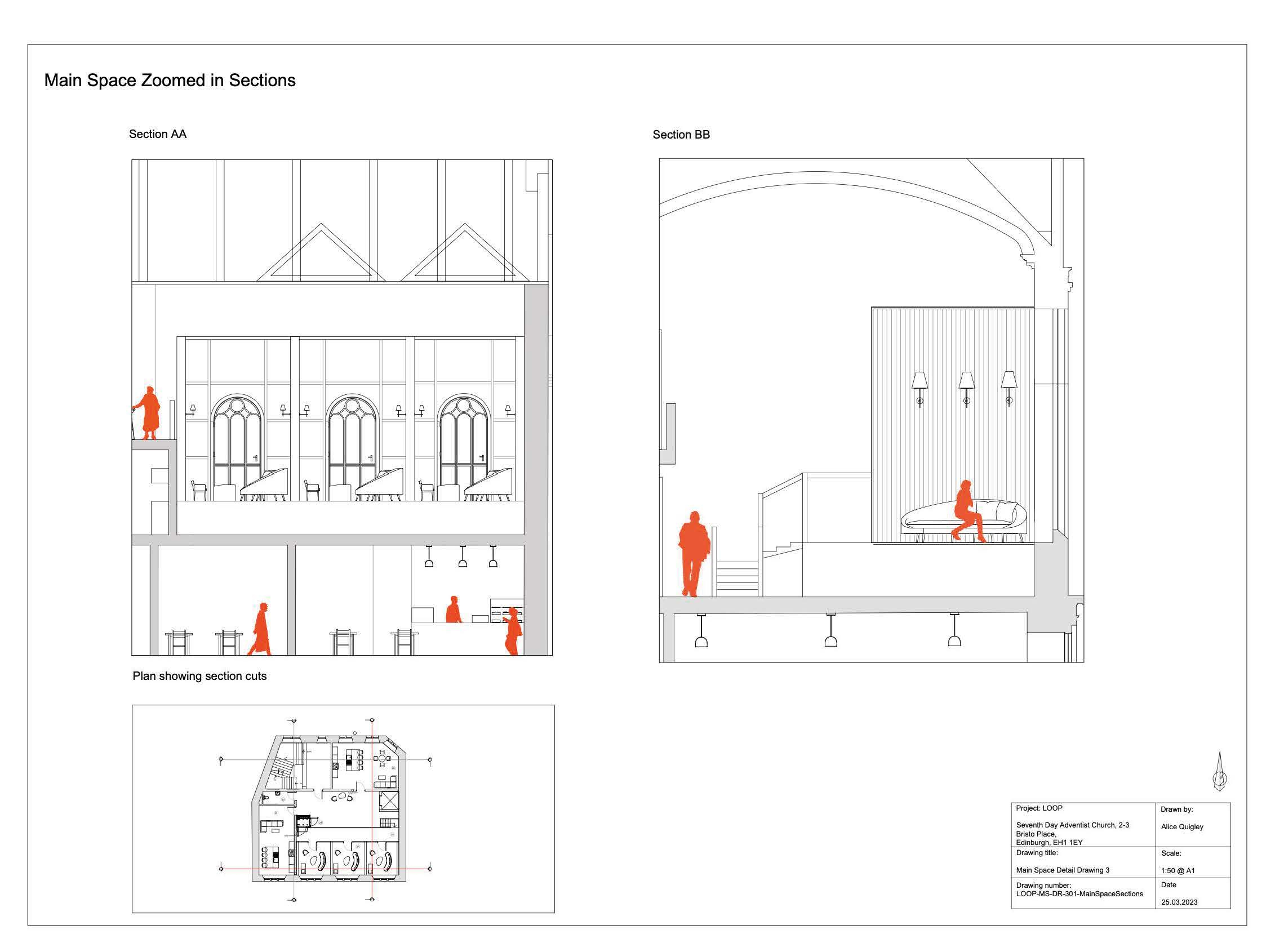
According to Alzheimer’s Association (2023), music can have significant effects on helping symptoms of Alzheimer’s. Simply listening to music can potentially reduce frustration and help with behavioural issues. A combination of creating a specialised environment and working with the existing building was used here. The idea here was to create fully acoustic spaces where visitors can enjoy listening to music. With carefully selected materials and access to a record player, it is with the hope that this space will help alleviate symptoms of Alzheimer’s.



Details



Alice Quigley

