

Plants are recruited to activate a large, neglected park in a diverse area of North London. The park is characterized by the Brent Reservoir with expansive playing fields, youthful woodland, grassland meadows and mature Oaks around its banks. Despite these features the park suffers from poor facilities and path networks with this evident from its desolate nature. To tackle these issues the park was split into zones of community parks, conservation areas and intervention areas each with distinct design interventions to activate entrance spaces, retain quiet ecological sites, and create climate resilient locations.
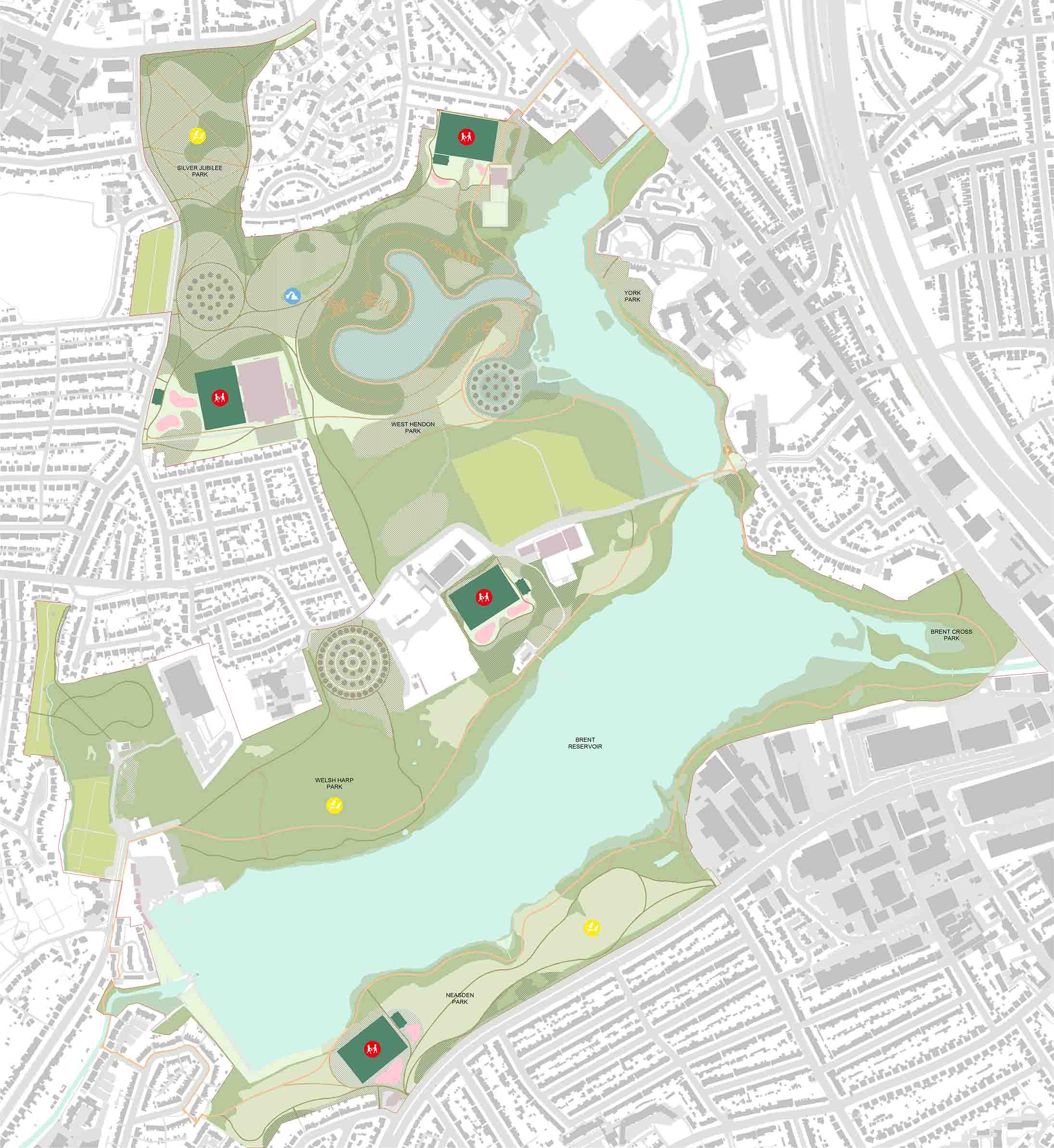
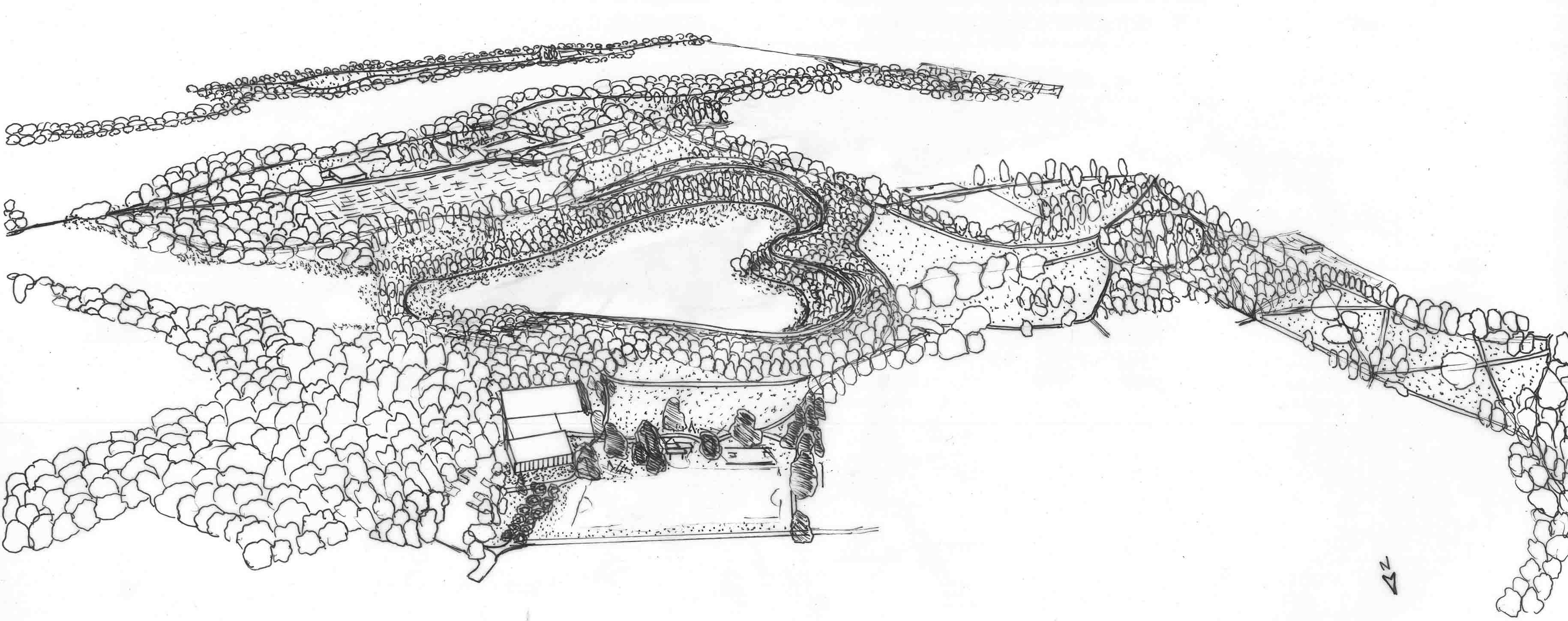
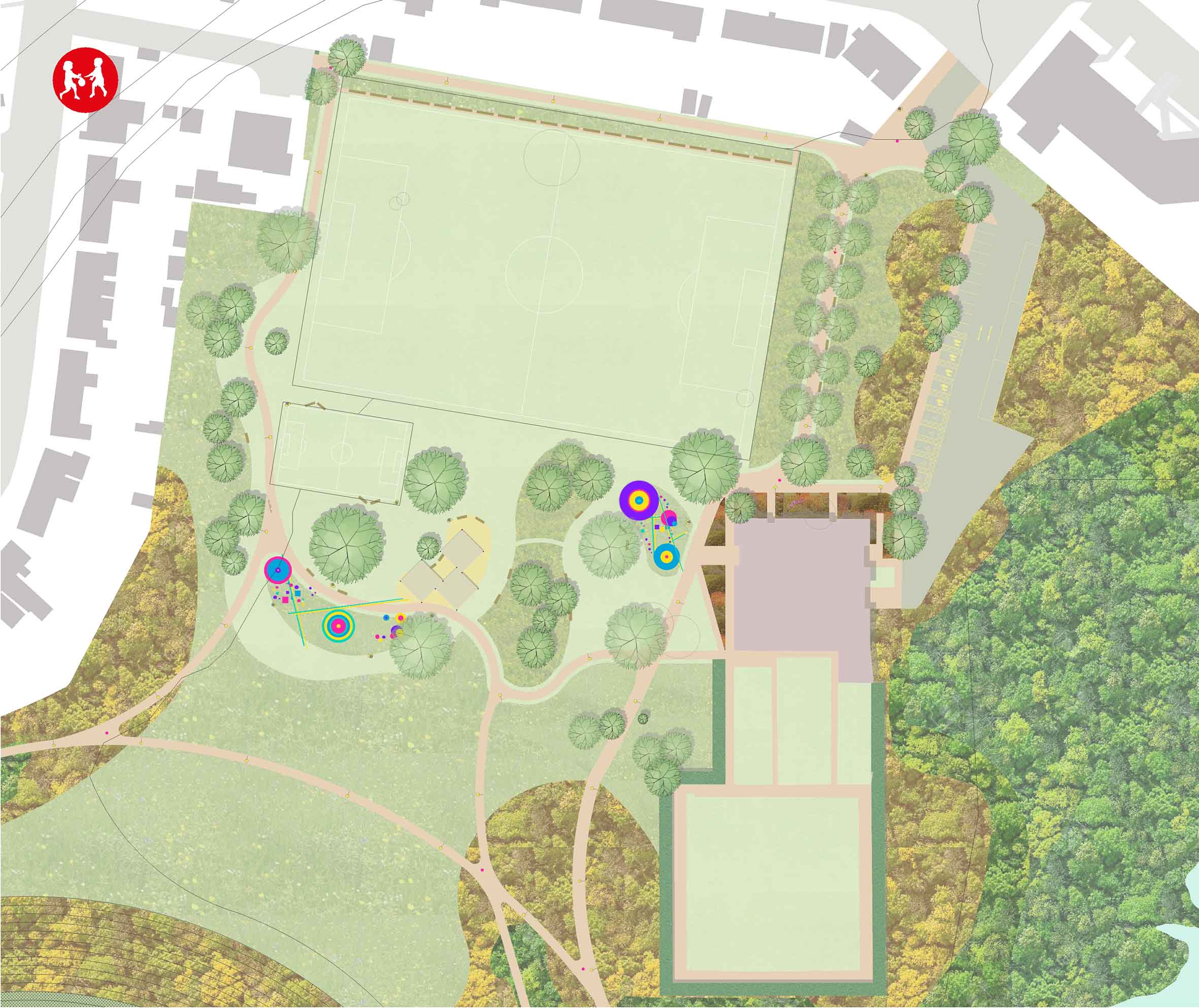
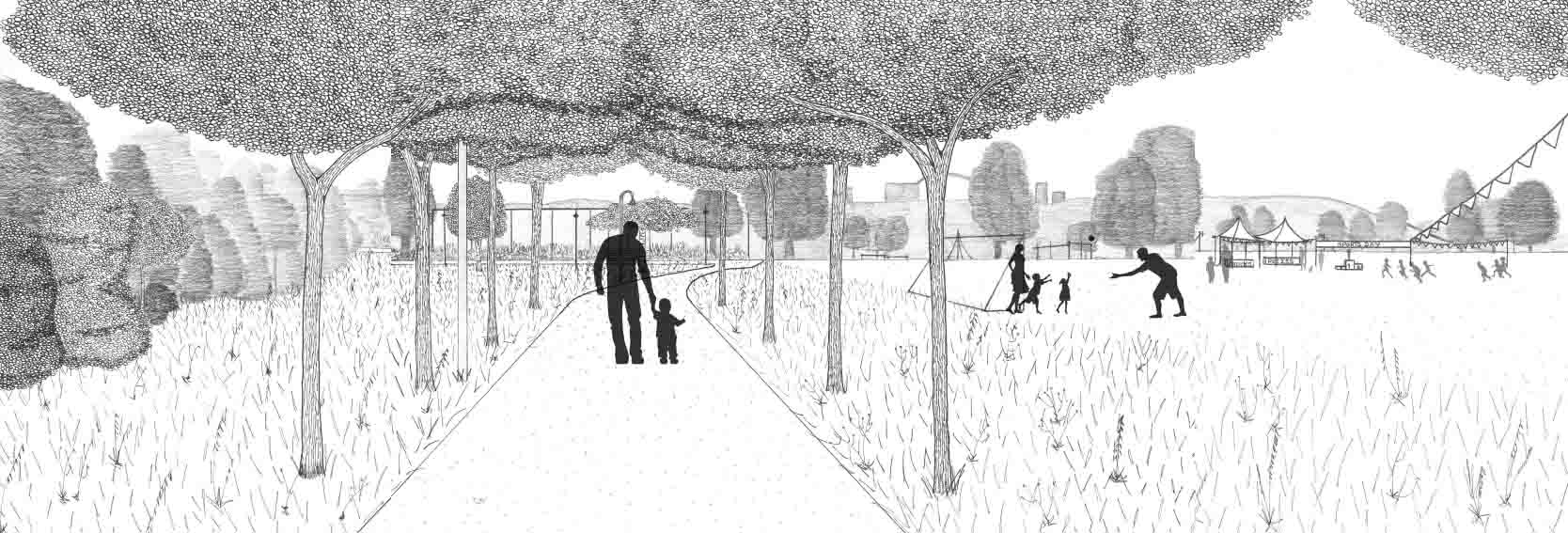
Community parks are rooms within the landscape and are situated at key entrance points. These rooms act as neighbourhood parks with cut grass, specimen trees and winding paths punctuated with play, sport, and herbaceous borders. This community park in West Hendon Park depicts design features duplicated in the other parks, an entrance avenue, sport pitch/community space, sheltered sandpit, lit routes and plenty seating in addition to retained features such as the community pavilion and car park.
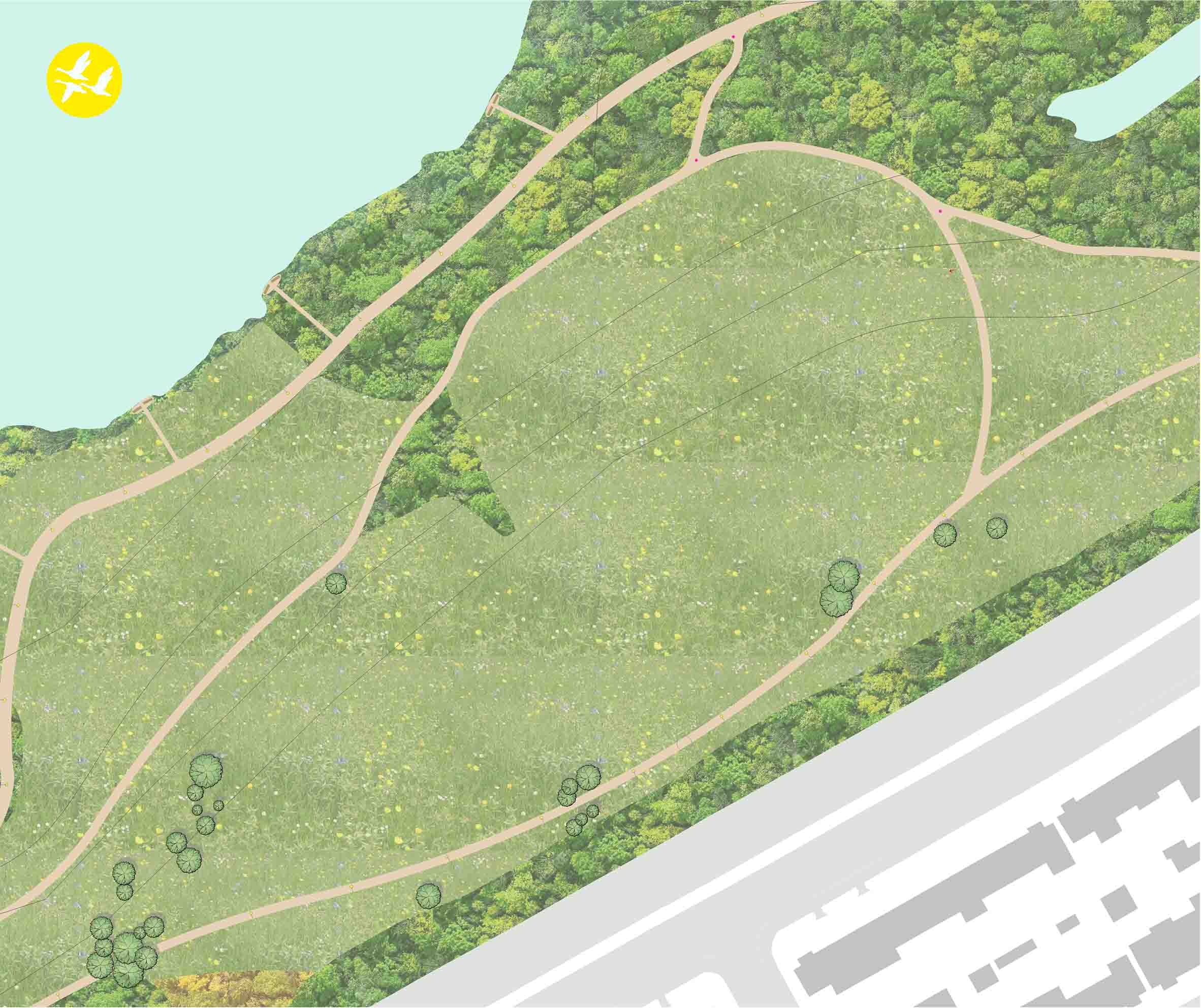
Conservation areas are locations where the existing vegetation biotopes are successful, but the human infrastructure is not. Maintenance, better path networks and seating are the only proposals in these areas. This conservation area is in Neasden Park and covers a broad grassland meadow and Willow Carr woodland on the reservoirs shore. Proposals here include seating areas at the reservoirs shore, better path connections with some lit, wayfinding turnstiles and a maintenance regime to remove younger trees from the meadow and stop successional vegetation.
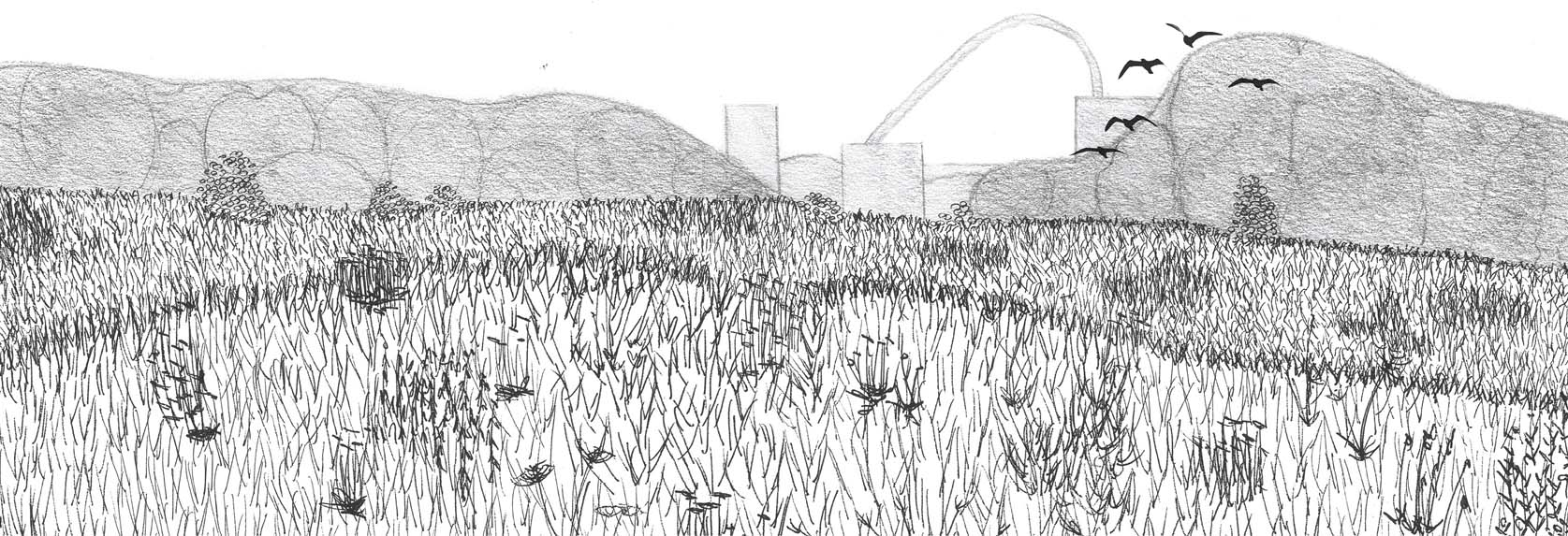
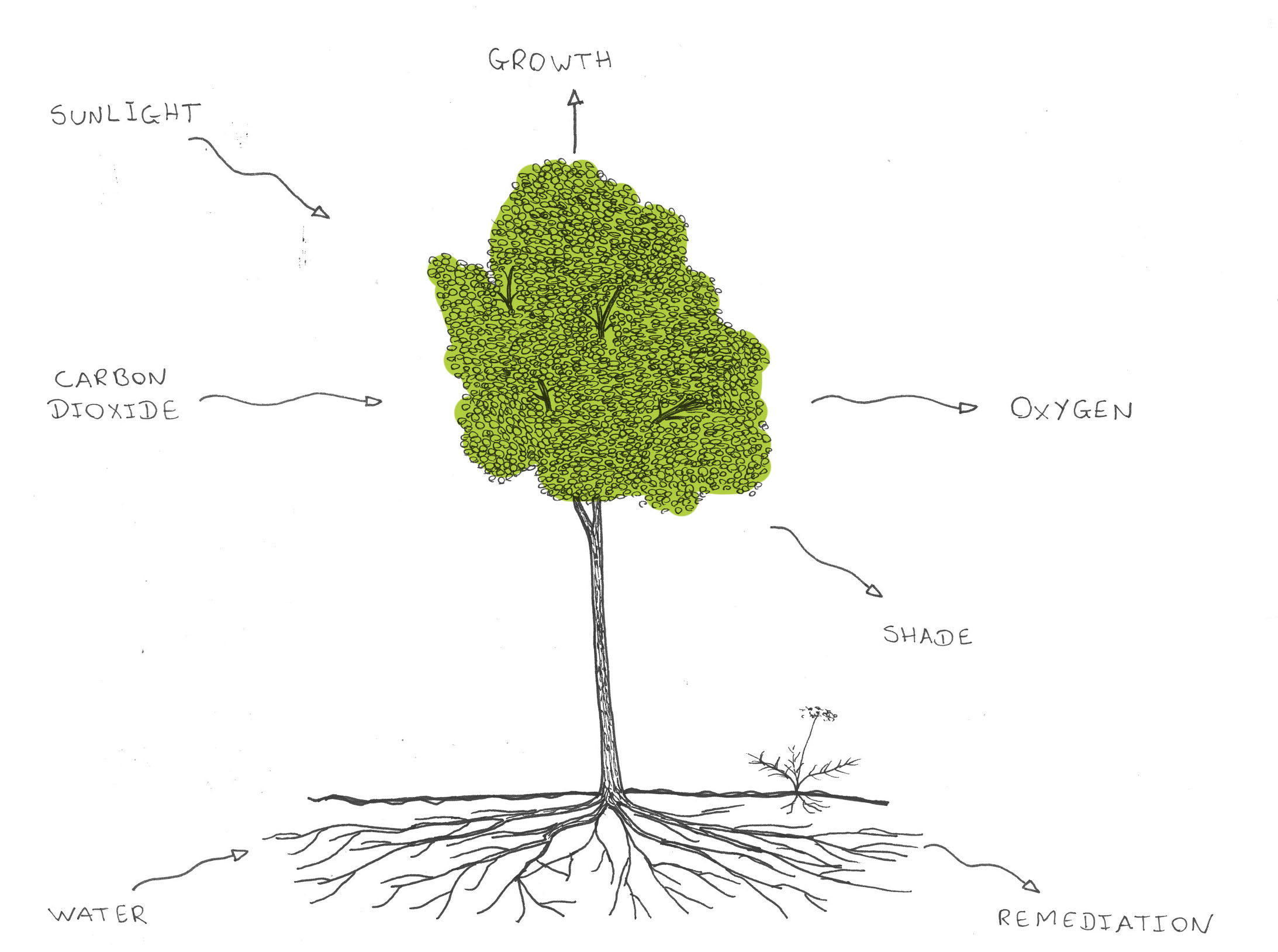
The test plot intervention areas consist of 3 sites of 10 metre in diameter plots each planted with different plant species to test their resilience to drought, marginal fluctuation or urban conditions depending on the test plot site. The aspiration is to have knowledge of resilient species to be planted in the wetland, around the park and across London. This site is in Silver Jubilee Park and tests drought tolerance being a south facing hillside. The test plots have a close link with the existing allotments next door where a community will establish to oversee the test plots through the years.
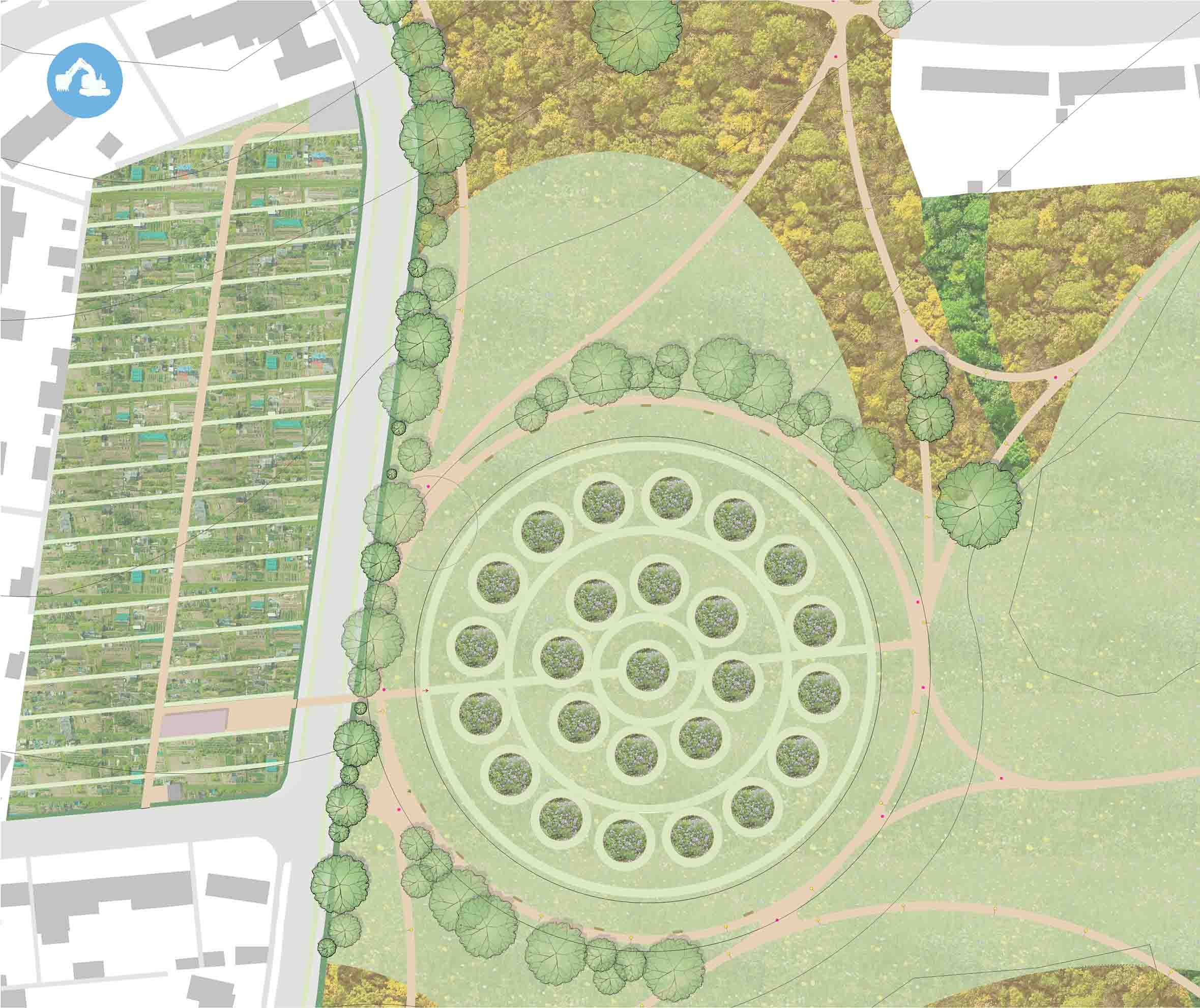
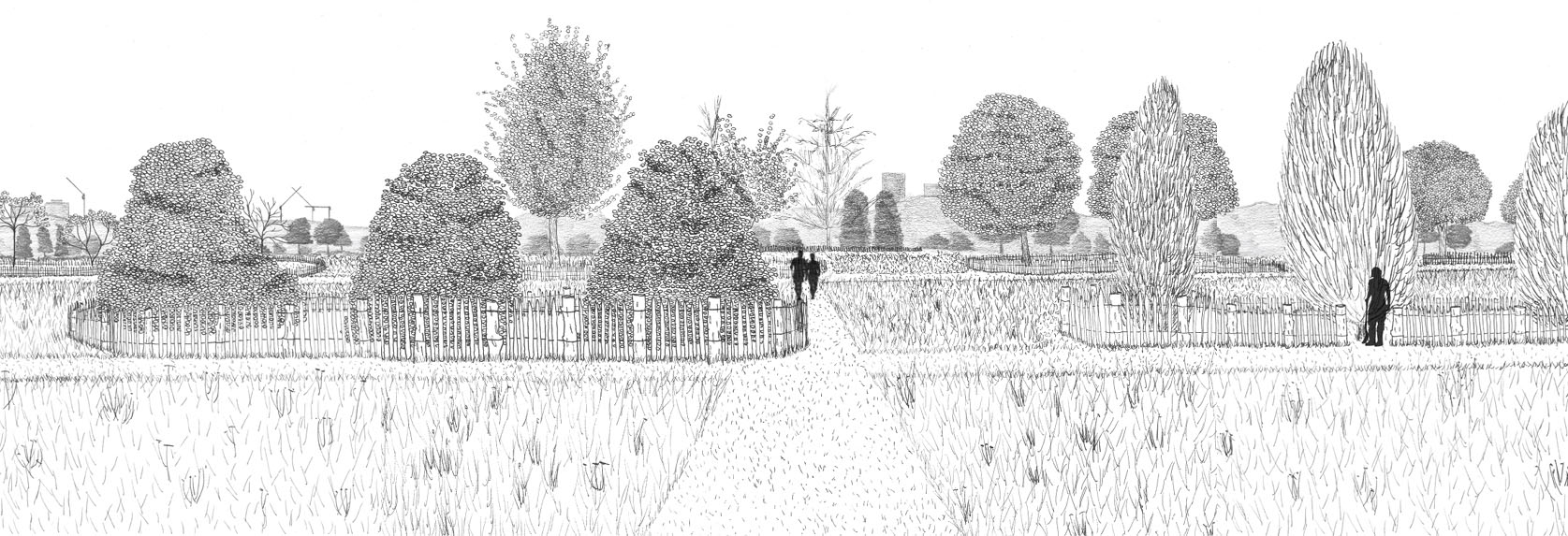
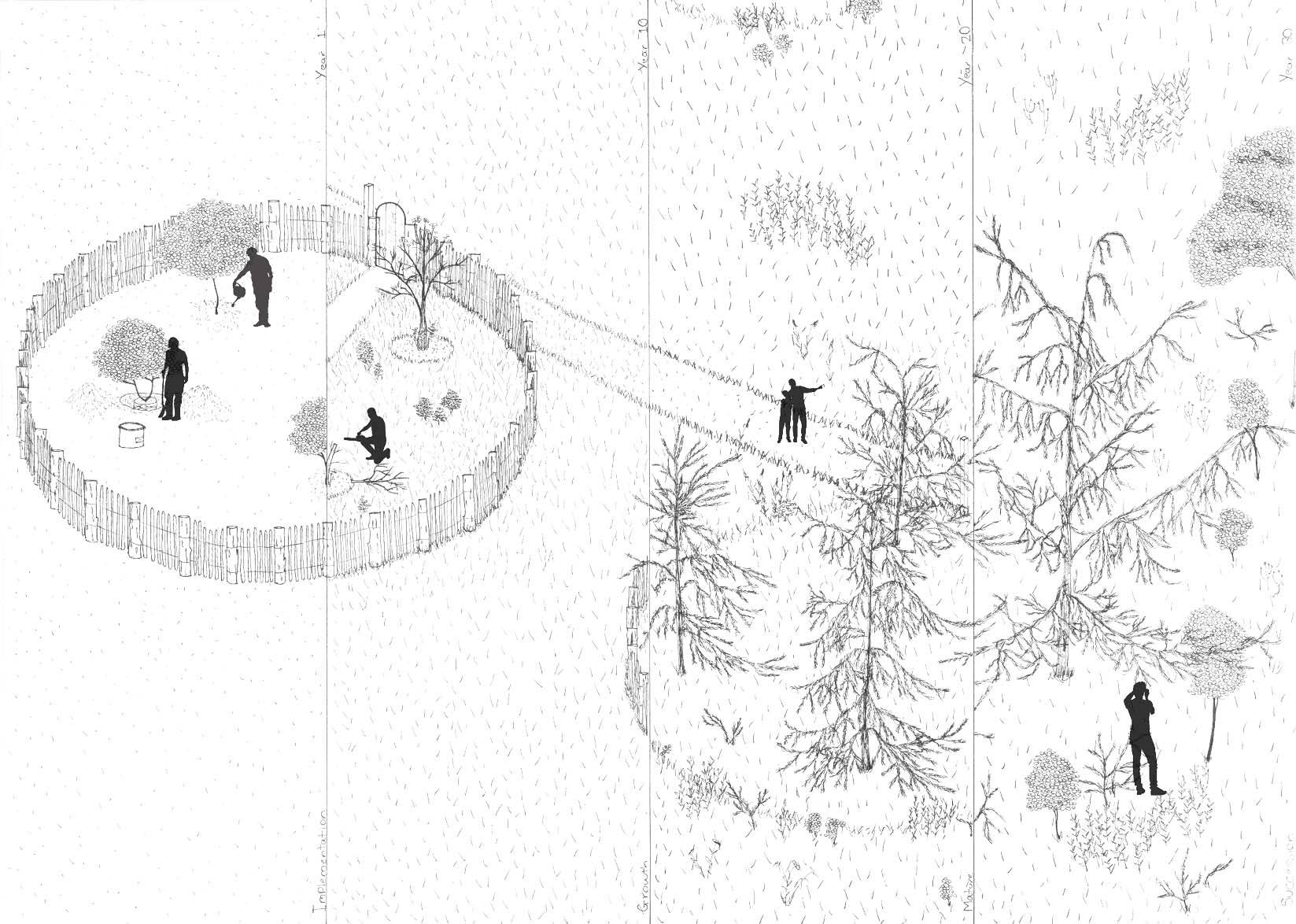
The test plots are a transient feature of the landscape, being part of the first stage of implementations but gradually threading into the landscape. Arboriculturists from Kew Gardens will oversee these trials as part of their efforts towards climate change. In the first 10 years the plots are planted and fenced to delineate each species but after the first decade it becomes clear which species are unsuccessful. With these species removed the plots remain vacant but not redundant as any successional vegetation offers useful insight into existing resilient species. After 20 years the fencing is gone and successful species obvious, this allows the construction of the wetland to commence. After 30 years the plots become naturalized, and species begin spreading.
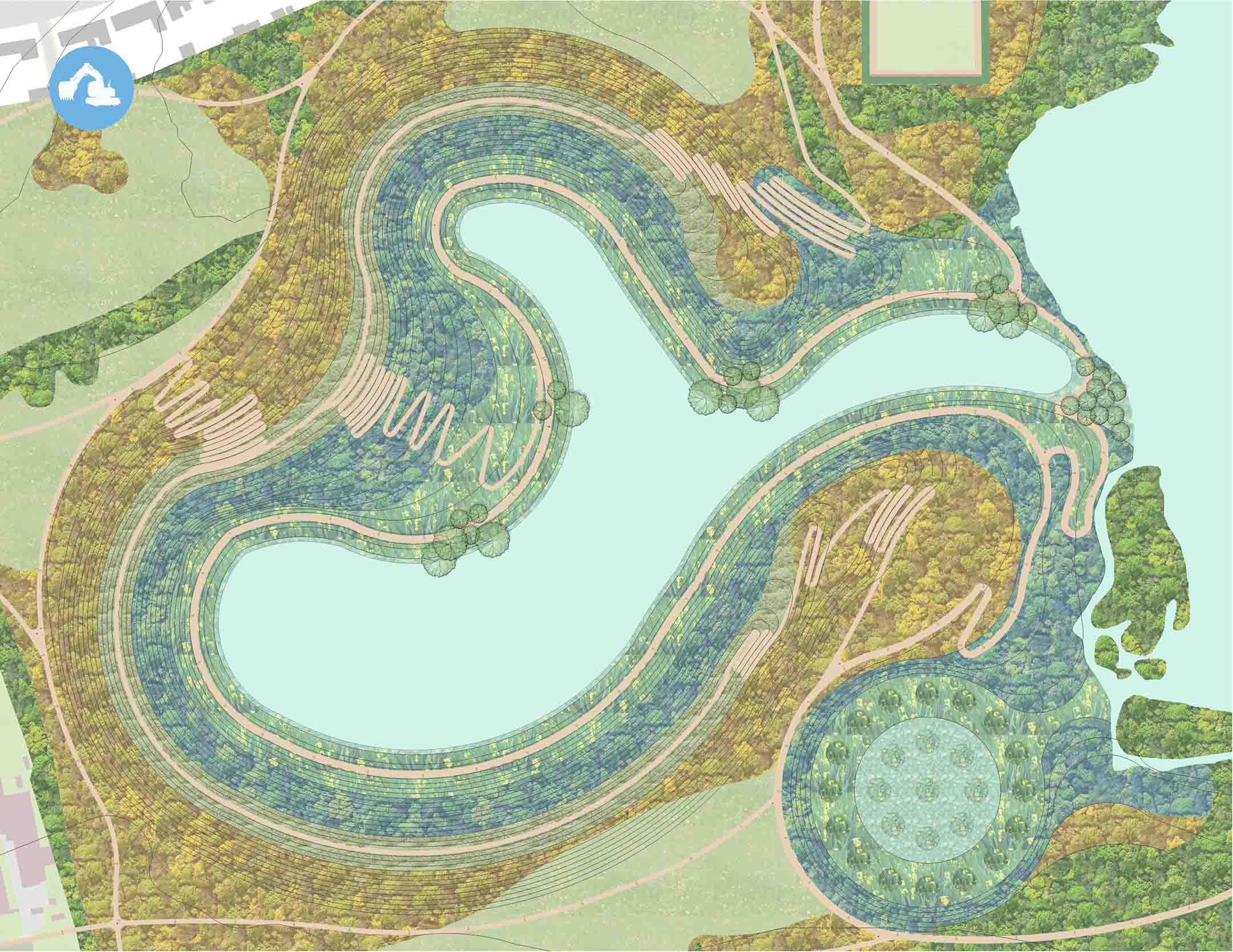
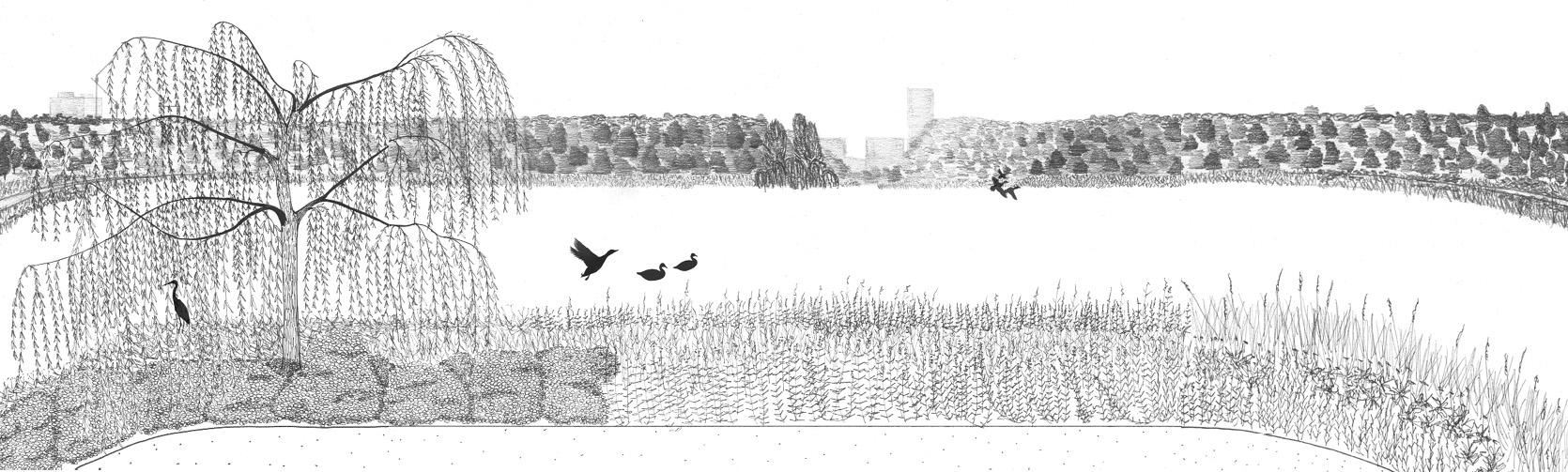
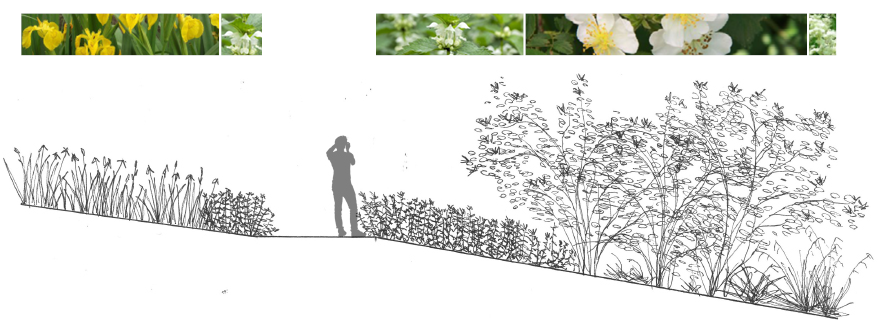
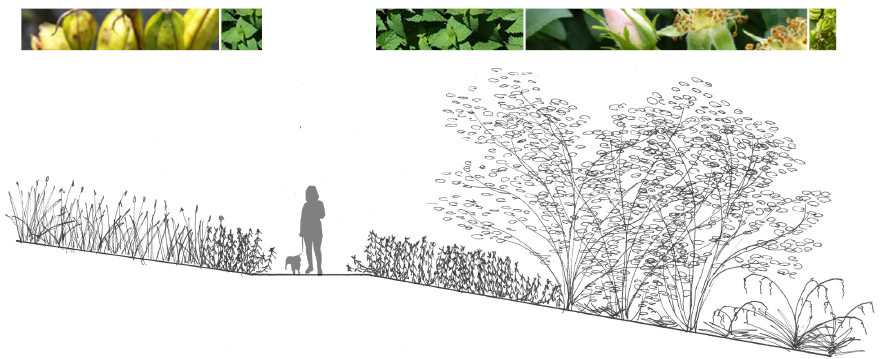
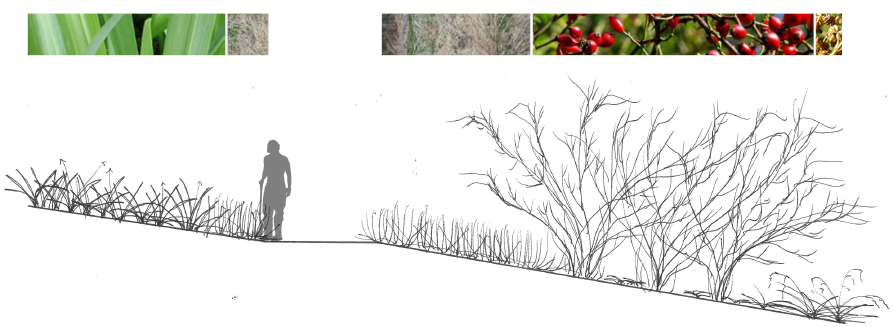
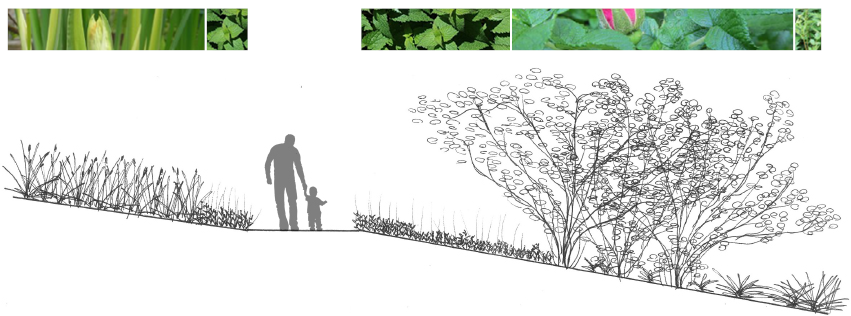
The wetland will create space for excess water when the reservoir becomes full, in this space wetland planting will support a declining biotope of the UK. The wetland will be the centrepiece of the park, a location to visit and be in while expanding on the existing environments of the park with species from the test plots in addition to park-wide wet and dry woodland all intertwined. Situated on the flattest area in West Hendon Park, the cut and fill from the wetland will create a landform drastically changing the atmosphere in this area while giving views across the park and London.