


Felicity Anderson-Moore
"Measure for Measure" & "King Arthur"


Costume modelled by Edith Collins

About Felicity
Felicity Anderson-Moore was born and raised in New Jersey, USA, with dual British and American nationality. Her passion for the performing arts began with ballet and classical theatre and expanded to include costume design and construction. She has a strong academic affinity for the arts and social history and is motivated to improve inclusivity and maximise accessibility in the arts.
Awards
2022, Resilience Student Award, Shortlisted, University of Edinburgh, Scotland
2021 & 2022, The Edinburgh Award, Leadership in Student Opportunities, University of Edinburgh, Scotland
2017, 1st Place, Annual Design & Construction Competition, Fabricland, NJ, USA
2016, 1st Place & Best Sewing, Annual Design & Construction Competition, Fabricland, NJ, USA
Skills & Experience
- Flat Patternmaking & Draping
- Garment Design & Construction
- Handbag & Shoe Design & Construction
- Millinery & Puppetry
- Budgeting, Garment & Fabric Sourcing
- Hand Sewing, Costume Repairs & Alterations
- Experience with Dancewear
- Costume Design & Illustration
- Technical Drawings & Life Drawing
- Adobe: Photoshop, Illustrator & InDesign
- Microsoft: Word, PowerPoint & Excel
- Public Speaking & Performance
- Fluent French, Advanced German, Some Hindi & Arabic
- PVG checked


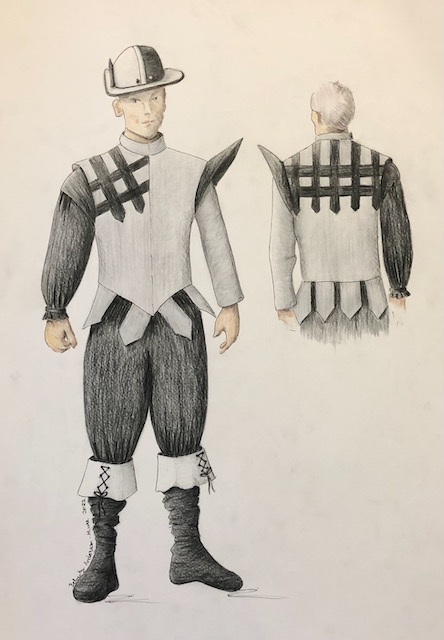
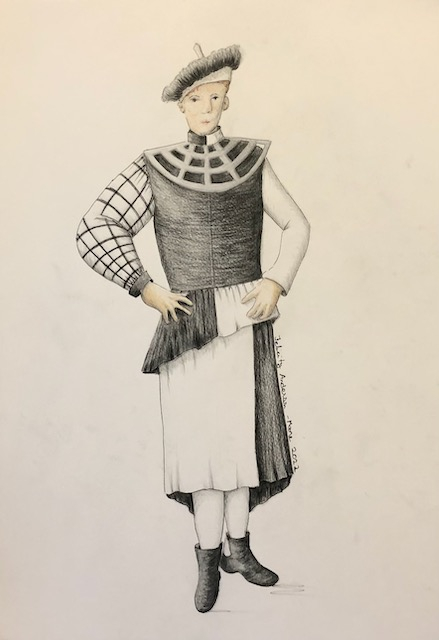
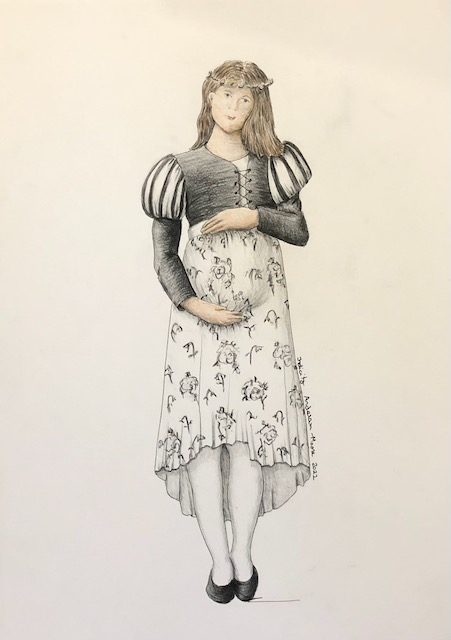
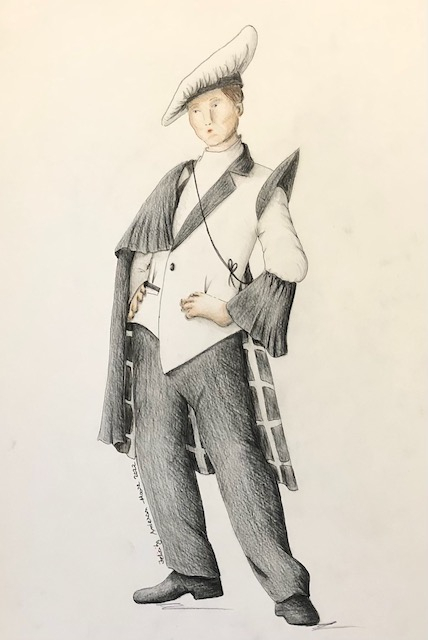
First Design Project: "Measure for Measure"
William Shakespeare's “Measure for Measure” is often described as a “problem play”, set in a dystopian world, which parallels our own. The characters are each flawed and complex, many with opposing ideas of what is ethical.
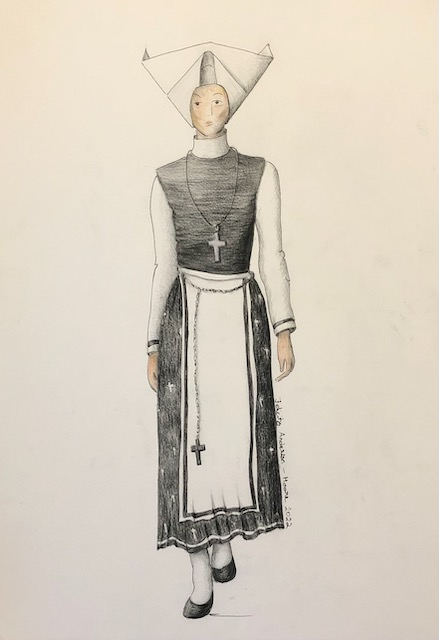
Felicity's designs for “Measure for Measure” are intended for a theatre production, with a minimalist set. The monochrome colour palette references the conflict between good and evil, presenting a cynical view that the issues in the play are eternal, never to be resolved. To emphasise that these are timeless and continuing, the costumes draw from more than one historical period, with emphasis on the Jacobean era of Shakespeare’s time and Victorian fashion of the 1860s. The use of graphic prints draws the story into the current era.
Seven characters were designed for this project: Mistress Overdone, The Provost, Angelo, Juliet, Lucio, Mariana and Isabella.
"Measure for Measure" Set Design
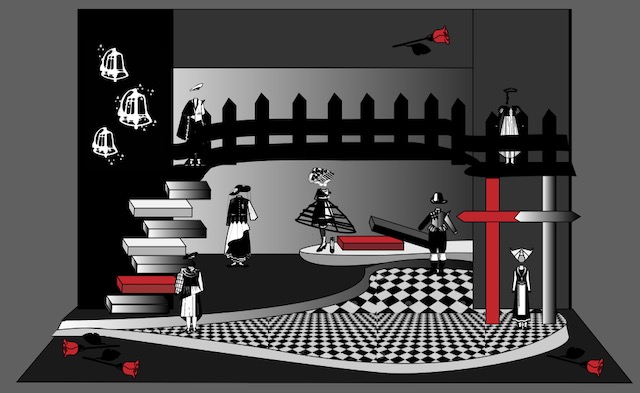
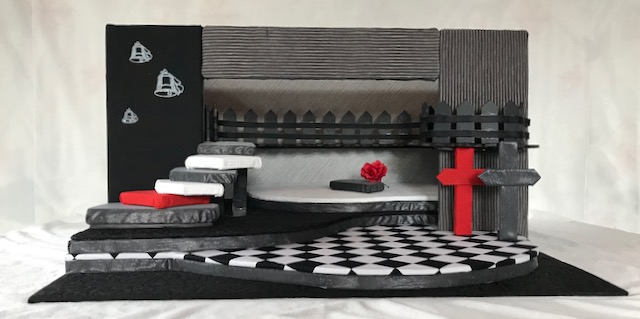
The minimalist set allows the costumes and plot to tell the story. Drawing from the surreal, disorienting world in the works of Dutch artist M. C. Escher (1898-1972), it includes a checkerboard floor from the game of chess, echoing the duke’s manipulation of the other characters. Levels are used to reference the levels of social status and the class hierarchy found within the play and a balcony with a latticed design references prison architecture.
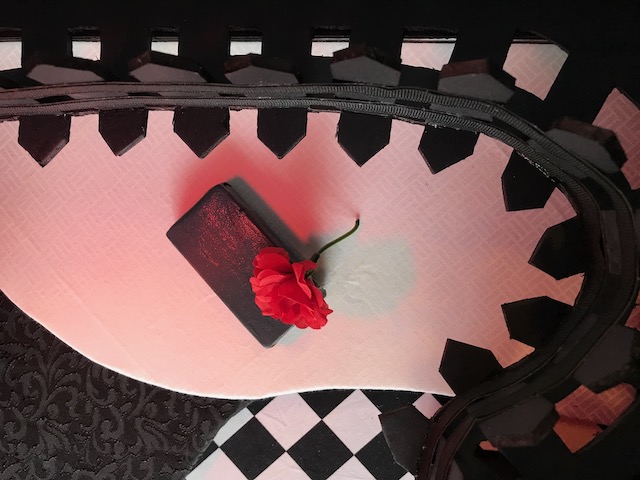
The cushion-like stairs near the bells represent the brothel. On the other side of the stage, Isabella’s religious area is indicated with two large crosses. Mariana’s “Moated-Grange” is represented by the red rose, while the Duke could lurk on the balcony, watching the other characters. Claudio’s cell would be the small balcony at the front of the stage, above the crosses.
Lighting would also be used to emphasise divisions by creating shadows and pools of light. Using red lighting, the stage takes on an ominous tone. A carefully placed red spotlight would indicate the “red light district” which Mistress Overdone frequents.

Mistress Overdone Costume
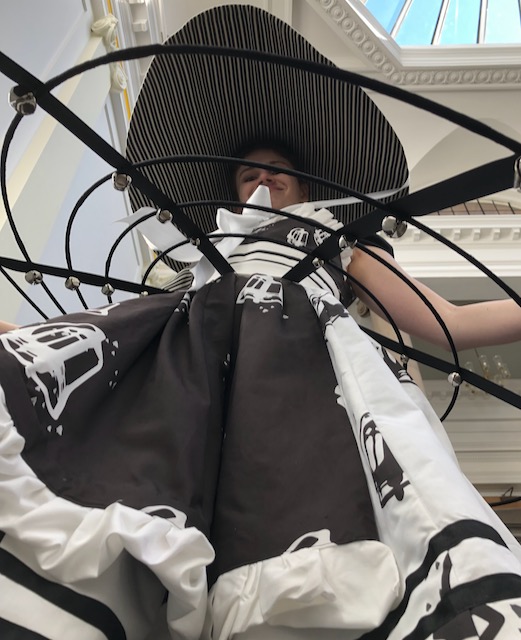
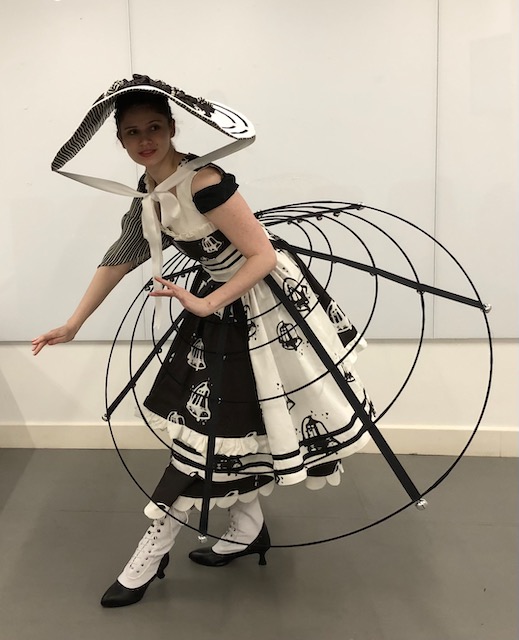
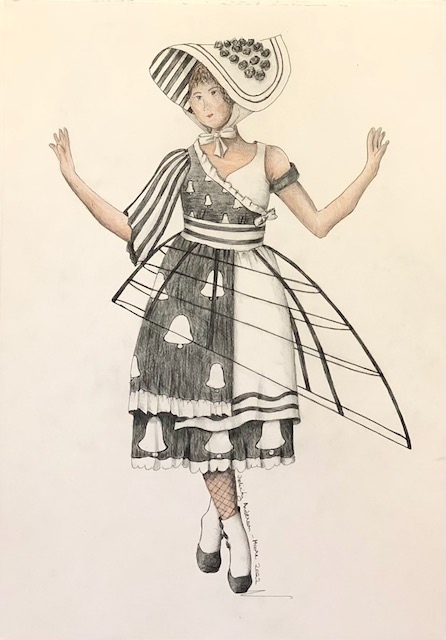
In the suburbs of Vienna, Mistress Overdone runs a brothel, which must now close due to the laws Angelo is enforcing. She is a savvy businesswoman and has run her business for many years but is anxious about her future. To indicate she is a Victorian prostitute, her hemlines are raised, with sleeves that are distinctly different from one another. The off-kilter hoop crinoline, worn over her skirts, represents the way prostitutes are caged in their role, but live outside conventional society. A flamboyant wide-brimmed Victorian bonnet counterbalances the oversized “cage”.
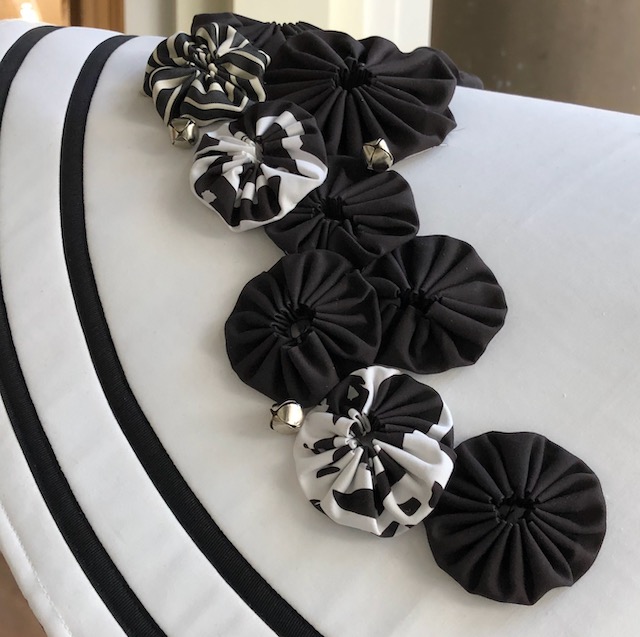
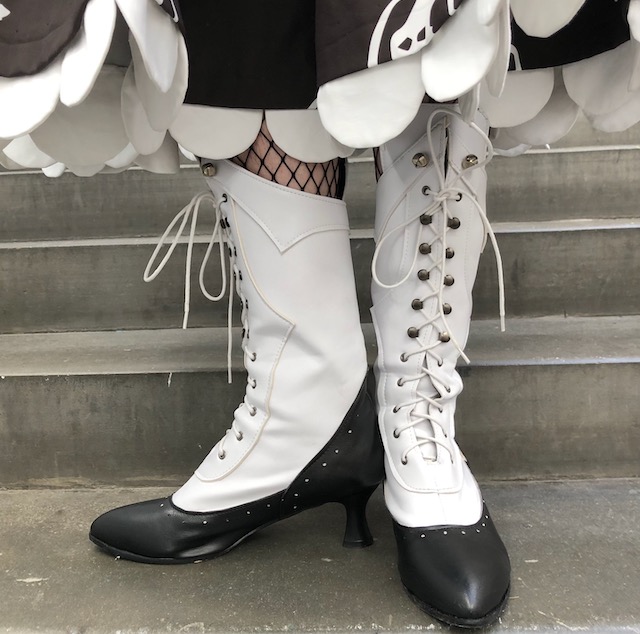
The costume references the fact that prostitutes were once required to wear bells. A bell print is prominent on her skirt, and jingling bells decorate the hat, shoes and crinoline. This brings to mind the nursery rhyme, “With rings on her fingers and bells on her toes, she shall have music wherever she goes!”
The costume is modelled by Edith Collins.

"Measure for Measure" Costume Plates

Second Design Project: "King Arthur"
There has been great debate about whether King Arthur was a real historical figure, a mythological creation or something in between. If there really had been such a king, he likely would have lived during the late fifth or early sixth centuries. Since then, his tale has evolved over the centuries, to create the mythical mediaeval court of Camelot, filled with knights in shining armour at a round table.
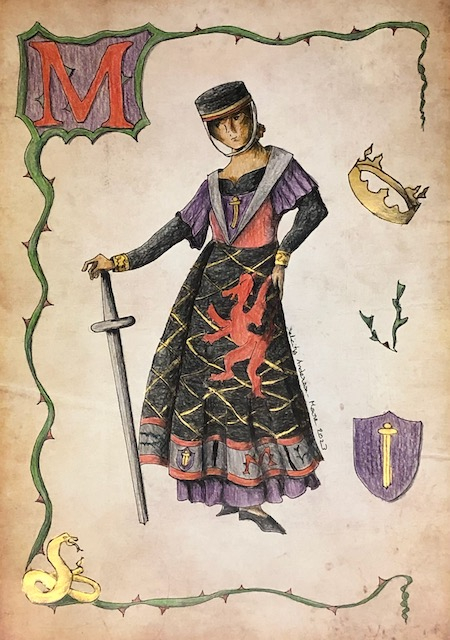
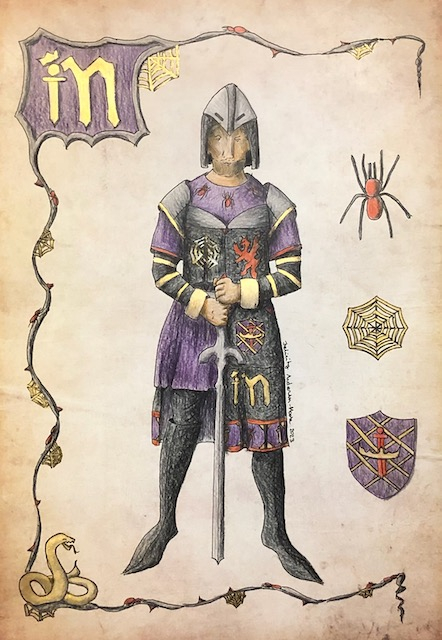
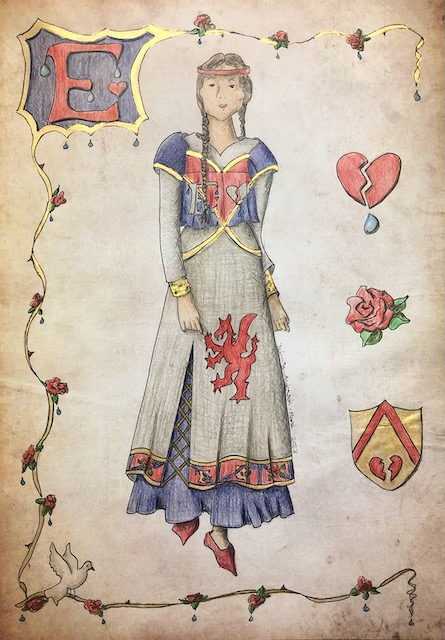
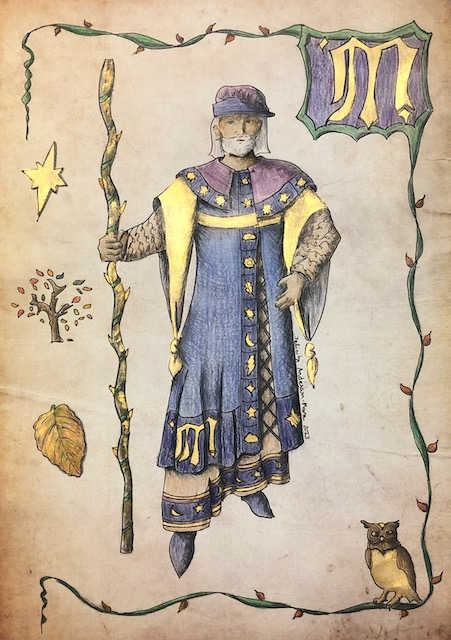
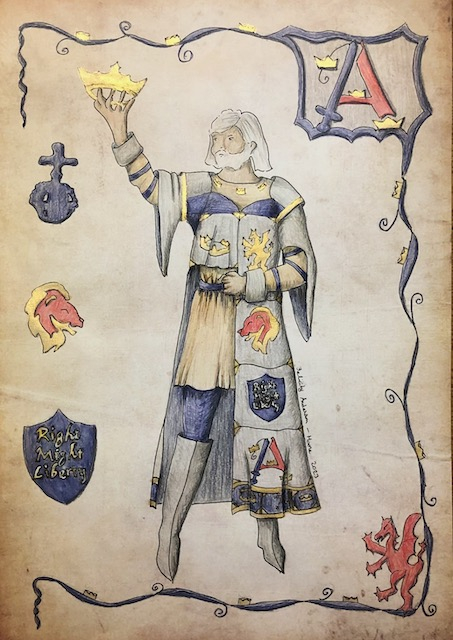
Felicity's project is based on the Victorian play script "King Arthur" written by Joseph William Comyns Carr, first performed in 1895. The costume designs have a dazzling colour pallette and reference the heraldry of the recent funeral of Queen Elizabeth II and the coronation of Charles III, as well as mediaeval tapestries, illuminated manuscripts and stained glass windows. The production is loosely set around the 12th or 13th century, mixing the historical and the magical, based on when The Round Table and quests for The Holy Grail were first introduced. Appliqué replicates mediaeval art to create fantastical heraldic designs for the characters.
Seven characters were designed for this project: Morgan, Mordred, Elaine, Merlin, Lancelot, Guinevere and King Arthur.
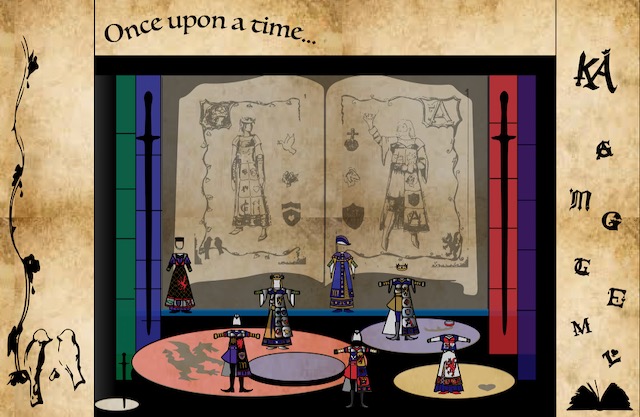
"King Arthur" Set Design
The set enhances a sense of storybook fantasy by creating illuminated book illustrations which have come to life. Circles on the stage floor allude to the round table and the Arthurian legend of the Sword in the Stone. They may be down-lit with silhouettes of symbols for the various characters. Oversized swords loom on the flats and initials of each character decorate the front of the stage. A blue raised platform at the back of the stage indicates the river between Camelot and Astolat, where Elaine’s coffin floats in Act 3.
Lighting would help to convey shifts in mood, opening with the atmospheric prologue hazily lit to indicate its reference to the distant past. The first acts would be brightly lit as Lancelot and Guinevere live without any sense of consequences for their actions. The set would darken as Fate reveals that the world of Camelot, thought by many to be a place of peace and justice, may not end for them in a happily ever after.
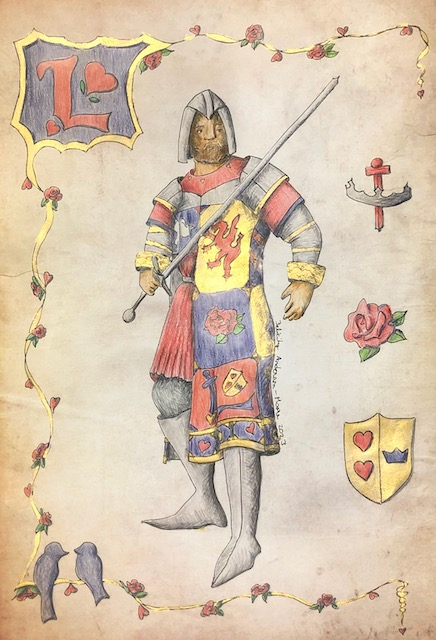
Lancelot Costume
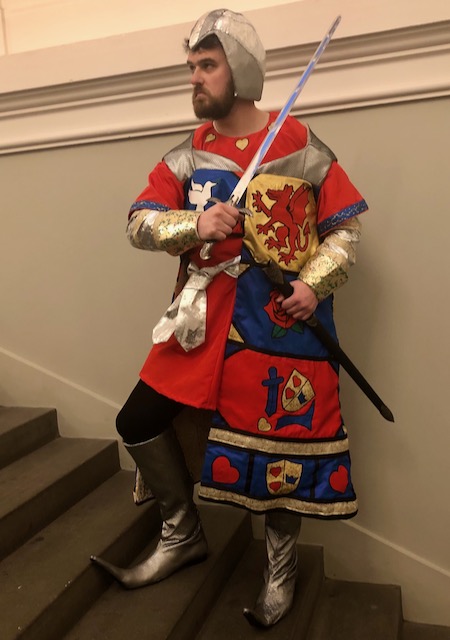
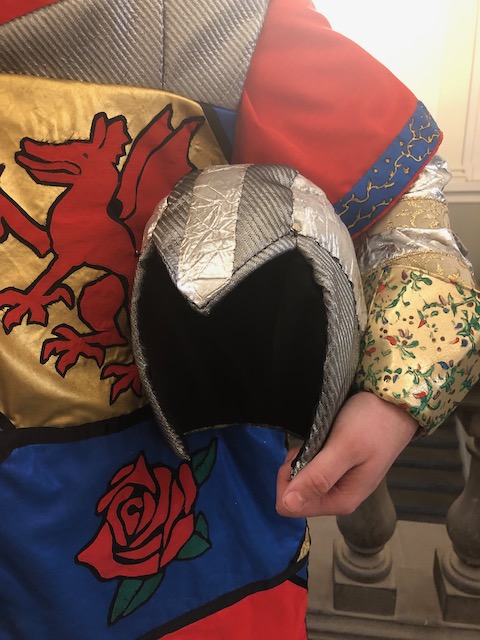
Lancelot is described by King Arthur as the “flower of all knighthood”. He thinks of himself as someone whose first loyalty is to the king, which is proven not to be true. His attire is inspired by those of knights from the 13th century, who wore surcoats decorated with heraldic symbols, both to identify friend and foe on the battlefield and to show allegiance to a particular lord. The knight also wears a helmet and metallic boots with an extended point, emulating those seen in history. His shirt cuffs are hand-painted with a floral manuscript-like design.
The costume is covered with appliqués, adding symbolic elements to the costume, including historiated letters similar to those found in mediaeval manuscripts. These include an intertwined L and G to show Lancelot's love for Guinevere. Doves and bluebirds represent romantic love, while the shields and red dragon show his allegiance to Arthur Pendragon.
The costume is modelled by Craig Waters.



"King Arthur" Costume Plates



Felicity Anderson-Moore
"Measure for Measure" & "King Arthur"
Share:

